Tuesday, December 05, 2006

Schizophrenia, Religion, Autism and the Indian culture (alternate title: Life, The Universe and Everything)

In continuation of my focus on the Schizophrenia-Autism dichotomy, I'll like to highlight two articles that seem to support my view.

The first is a blog post by, John Horgan, speculating whether religiosity is the inverse of autism.


The anthropologist Stewart Guthrie proposes that religious experiences—and particularly those involving visions or intuitions of a personal God--may stem from our innate tendency toward anthropomorphism, “the attribution of human characteristics to nonhuman things or events.” Guthrie called his book on this theory Faces in the Clouds, but he could have called it Jesus in the Tortilla.

Recent findings in developmental psychology dovetail with Guthrie’s theory. By the age of three or four all healthy children manifest an apparently innate ability to infer the state of mind of other people.

Psychologists postulate that autism stems from a malfunction of the theory-of-mind module. Autistics have difficulty inferring others’ thoughts, and even see no fundamental distinction between people and inanimate objects, such as chairs or tables. That is why autism is sometimes called “mind-blindness.”

But many of us have the opposite problem—an overactive theory-of-mind capacity, which leads to what the psychologist Justin Barrett calls “hyperactive agent detection.” When we see squares and triangles moving around a screen, we cannot help but see the squares “chasing” the triangles, or vice versa, even when we are told that the movements are random.


This is compatible with this blog's Schizophrenia-is-the-inverse-of-Autism theory for the following reasons:

1. Too much belief in agency in Schizophrenics (the hyperactive Agent detector conceptualized above) vs too less belief in agency in Autistics - characterized by me earlier as a Fantasy/Imagination Vs Reality orientation - has a direct relevance to whether one attributes anthropomorphic agency to non-living things and events (and thus Nature or God) or even fails to attribute intention to humans and animals and assumes them to be mere automata. I believe while a schizophrenic mindset can be characterized by a suspension-of-disbelief and too much causality and intention attribution (thus leading to the mindset compatible with religious/ spiritual leanings), the autistic mindset would lead to too much skepticism, too much even-causal-happenings-are-only-coincidental mindset and a reductionist, atheistic mindset that attributes no intention to humans, least of all animals, and believes that they are just advanced machines. I guess both are extremes of delusion, in one case one characterizes that as the GOD delusion; but the other extremist who sees no role of agency or intentionality (even in humans) is hauled as a great scientist!!

2. Another prominent dimension on which the Schizophrenics and autistic differ is the Literal-Metaphor dimension. I would like to frame that in terms of a Reference-Meaning use of a linguistic word and the consequent distinction in linguistics between a symbol as a referent of something and a symbol as signifying a meaning. For an excellent commentary on this difference, please do read this classical paper.

Meaning, let us remember, is not to be identified with naming. Frege's example of 'Evening Star' and 'Morning Star' and Russell's of 'Scott' and 'the author of Waverly', illustrate that terms can name the same thing but differ in meaning. The distinction between meaning and naming is no less important at the level of abstract terms. The terms '9' and 'the number of the planets' name one and the same abstract entity but presumably must be regarded as unlike in meaning; for astronomical observation was needed, and not mere reflection on meanings, to determine the sameness of the entity in question.

It is my contention that while the Schizophrenics are meaning obsessed; the Autistics are more reference obsessed, and thus have problems with metaphorical and figurative speech. From linguistics one can stretch the Meaning-Reference distinction and conceive of too much meaning orientation in schizophrenics ( and a meaningful life requires a GOD that gives a meaning to our lives) versus a nihilistic orientation in autistics that views the life/ evolution as purposeless. As many evolutionists famously claim - there is no meaning inherent in evolution, life or humans - rather that the question of meaning is invalid. Life just is.

3. Many schizophrenic delusions can be explained by an extreme manifestation of religiosity/ spirituality. As Szasz famously said, " If you talk to God, you are praying; if God talks to you you have schizophrenia". Both a belief in GOD and his ability to listen to our prayers (the religious belief) and the converse belief that God can talk to us , many times in symbolic ways, but sometimes in the form of actual auditory hallucinations are a manifestation of the same cognitive mechanism that attributes too much agency, causality and meaning. Many schizophrenics, indeed do suffer from delusion of Grandeur, whereby they think of themselves as GOD-like; or the delusion of persecution and paranoia whereby they are persecuted by Satan like evil figures. thus both hallucinations as well as the common delusions are explainable by the religiosity orientation. this time the GOD delusion is different - one believes that one is a god-head. In non-religious cultures, these being-GOD delusions may take the non-religious forms of being a famous historical person (who had great agency and effect on Human history and is presumably now active via the agency of the deluded schizophrenic), and the persecution delusions may not refer to Satan- but to their non-secular counterparts- the CIA and the government!! Of course the pathological forms of an Autistic mindset, that may have nihilistic orientations, and out of boredom and feelings of meaninglessness, may resort to meaningless acts of violence like the Columbine Massacres is one direction which needs further study.

I would now like to now draw focus on the Cultural differences post where I had speculated on the different incidences rates of Schizophrenia and Autism in the East Asian and American cultures based on the differential emphasis on holistic and contextual versus analytical and local processing and cognition and also presented some supporting evidence. The well documented religious/spiritual inclination of Oriental cultures versus the Scientific/materialistic orientation of the American and western cultures may be another factor that would affect and explain the relative incidences of Schizophrenia and Autism in these cultures.

In a culture like India, in which the people believe in 18 crore (180 billion) Gods and Deities, believe in reincarnation and believe that every human being is potentially divine, if a human errs towards an extreme and starts developing funny ideas of being a God herself, then that may not ring the alarm bells immediately. Rather some form of that delusion may even be encouraged (that is why in India names are kept after the Gods and Deities; while its rare to find the name Jesus in West, you can find millions of Rams in India). If the same GOD-delusion develops in an American, then his idea of being Jesus (or an angel) would definitely be detected early, lead to an earlier 'label' and an earlier hospitalization.

That said, I would now like to draw attention to an article today in the Times Of India, that pointed me to some more literature that unequivocally shows that not only are the incidence rates of schizophrenia less in India (and other third world (Asian) countries), the prognosis is manifold better in Indian patients as compared to American patients.

The success story of schizophrenics in India was propagated by mental health professionals based on the WHO research DOSMeD in 1979. This was carried out in 10 countries including developing ones such as India, Nigeria and Columbia. The findings showed striking differences in the prognosis of schizophrenia between developed and developing countries. The underlying causes for the diversity were associated more with family and social variables than clinical determinants. Majority of patients in developing countries showed remission over two years; only 50 per cent of them had a single relapse though around 15 per cent never recovered. Patient outcome in developing countries was superior to that in developed economies.


This difference has been hypothesized to be due to the strong family structure (and I do believe that it is an important factor) and the social cushion, support and acceptance that a family provides to the patient and shields him/her from stressful situations that may trigger a relapse.

This theory of a family-protective-advantage has come under attack recently, but I think the attack is flawed because it clubs countries not according to Cultures, but according to developmental status. Indeed, the other factor that may be affecting a better outcome in schizophrenic patients may be the cultural differences like the different cognitive/perceptual styles and a more tolerance for religious/spiritual/ mystical ideas. By shielding a person from stigmatization and isolation, based on eccentricities exhibited along these dimensions, one may be preventing or delaying relapse, and ensuring better outcome by not pushing the person over the edge. In the pats, it was not infrequent, for those who had psychotic experiences to be labeled as shamans and to be treated with respect, rather than stigma and isolation; thus ensuring that they were not exposed to social stresses in the future.

I have taken a somewhat deprecating attitude towards the extreme autistic orientation characterized by no intentionality, causality, spiritual beliefs, but I am a strong believer in the fact that though the extreme manifestation of Autism/Schizophrenia makes one dysfunctional, a pronounced autistic/ schizophrenic orientation does endow one with creative faculties - either to understand and manipulate the world (the Sciences) or to understand and manipulate the subjective experiences (the Arts) . In particular, as the readers of this blog would most likely be scientists, and because I belong the the scientific community and have failed to see how a scientific orientation is incompatible with an artistic/symbolic/spiritual orientation , I have taken a harder line for the extreme Atheist and nihilism zealots.

I believe one can, and must, utilize the different types of cognitive abilities these extreme manifestations and disorders caricature. Do let me know what your think!


Sphere: Related Content

Savor the brain delicacies: encephalon 12 served hot and spicy at the AlphaPsy

The latest Encephalon, available at the AlphaPsy, is a mouth-watering treat that is not to be missed for life. It is not only delicious, but also healthy and wholesome.

You can jump to the main course, which starts with this blog's contributions, or you can savor the appetizers first like the recent research implicating entorhinal cortex with stimulus novelty detection and hippocampus with associative novelty detection based on comparing the stimulus with an expectation that is generated based on the last presented stimulus. This lines up neatly with earlier studies I have reported regarding three dissociated process of novelty, familiarity and recollection detection and the place and grid cells present in hippocampus and the associated cognitive map theory of the hippocampal function.

There are other delicacies ranging from the humpback whales spindle neurons to the self-fulfilling-prophecy effects that lead to bad luck for Vietnamese children born in bad luck years.

Recalling the feast has already made me hungry again, so I am going back to have a second course, or at least a few more desserts. Hope you manage to get there before me; don't complain if the stocks get exhausted!!


Sphere: Related Content

The evolutionary trajectory of color vision

In a recent comment, a reader of this blog had highlighted some concerns regarding an evolutionary trajectory of color vision evolution that I had proposed in conjunction with the evolution of color terms in human languages and as a possible explanation for the linguistic trend. At that time, I had proposed a possible evolutionary scenario, without doing due diligence investigation of existing evolutionary theories of color vision, as my post had more of a linguistic and developmental focus and the evolutionary conjecture was just that- a conjecture, which, if found true, would lend more credence to my linguistic trend. Thanks to Andreas, I reviewed the literature on color vision evolution and was surprised to find some support for my theorization.

Before I discuss the color vision evolution, I'll strongly recommended reading two posts on the evolution of color vision and the evolution of retinal structures (more Avian focus here) , for getting some basic familiarities with the retinal structures involved in color vision and how they might have evolved.

To recap,

An animal has color vision if it has the capability of discriminating lights (scattered light as well as light sources) on the basis of the lights' spectral content, even when those lights are of equal subjective brightness.

The front end requirement for such a system is that the animal must have at least two different spectral classes of receptor, where each class is defined by the sensitivity of the receptor to light as a function of wavelength.


The above succinctly defines what we usually mean by color vision. You can either have a dichromatic color vision, when you have two differently tuned receptors to detect different light wavelengths and the different signal combinations from these receptors yield different hues; or you can have trichroimatic / tetrachromatic vision where three/four independent color signals are combined to yield an entire Hue range. One familiar with the RGB color system used in computers, would note that it is based on the assumption of 3 pure colors, which can be mixed in different amounts to yield most of the color hues we see on the monitor.Pigeons, and birds in general, have a tetrachromatic color vision.

Now for some basic visual circuitry:

The retinal structures involved in vision, in mammals, are, pohotorecptors (classified as cones and rods), horizontal, bipolar, amaracine and ganglion cells.


However, for all vertebrates (mammals as well as reptiles and birds) and invertebrates as well, the receptor mechanism is conserved and is basically the same and we will discuss that first:

The first step in the transduction of light energy to a neural signal is the light-induced isomerization (change of shape) of a chromophore, specifically a vitamin A derivative. Each chromophore is bound to a membrane protein called an opsin. The main function of the opsin is to change shape after light absorption triggers the isomerization of the chromophore: the opsin is an enzyme that is activated by the chromophore's isomerization. However, because of the linkage between the opsin and the chromophore, the opsin also serves to tune the wavelength dependence of the light induced isomerization reaction in the chromophore. That is, the chromophore's sensitivity to light at a given wavelength is established in part by the opsin--different opsins (i.e. opsins with different amino acid sequences) bound to identical chromophores will have different absorption probabilities at each wavelength. The result is that photoreceptors which express the gene for only one type of opsin will form a different class than photoreceptors that express a gene coding for a different opsin. Although there are other mechanisms that animals could use to differentiate photoreceptor classes (most notably some animals use more than one chromophore, and many vertebrates have colored oil droplets that screen individual receptors) it seems that the expression of only one of their possible opsin coding genes in each receptor is the mechanism that all animals use.


The above clarifies, that in mammals, we associate color vision with cones or specialized photoreceptors that contain a single pigment and are responsive to a single wavelength range. In reptiles, we also have double cones, wherein, two photopigment/ receptors are part of the same cell and then there are other mechanism like oil droplets that are also involved in color vision (but thankfully not in mammals). Rods are also a type of receptors, tuned to a frequency, but we normally do not associate rods with color vision, because they are usually used for night vision and their signals are not combined to create the color hue; yet a limited form of monochromatic color vision is possible by having a combination of one rod and one cone receptor types.


Next we need to differentiate between the rhabodermic eyes of invertebrates (based on r-opsin and the ciliary eyes of vertebrates based on c-opsins. Pharyngula does an excellent job here.

Eyes can be further categorized as rhabdomeric or ciliary by the nature of the cellular elements that make up the photoreceptors, by the kind of opsin molecule used to transduce the light signal, and by the signaling pathway used to convert a conformation change of the opsin molecule into a change in the electrical potential across the cell membrane.

As many accounts of color vision evolution focus on the phylogentic tress of opsin genes evolution to make their case, it is important to distinguish between the levels of analysis. All the known Opsin genes can be classifies in seven sub-families: two of these the r-opsin families and the c-opsin families are pertinent to, and expressed in, the photorecptors found in invertebrates and vertebrates respectively.


Thus, if one wants to focus on mammal color vision evolution, one needs to focus on c-opsins mostly. Many studies have been conducted over these and the phylogentic data indicates that the vertebrate opsins too form a neat tree with five sub-families relevant for (color) vision and 3 other sub-families having non-visual functions.

Thus, in mammals we have a five types of opsins : one rhodopsin-type and expressed in rods, and four other chromatic types (detecting Red, Blue, Green and U/V colors) and expressed in cones.

One should pause here and note that the human S(short) or blue receptor actually belongs to the U/V (S) family; while the human L (red) and M (green) receptors both belong to the Red (L) family.

These 5 opsin families (Red, Gree, Blue, U/V and Rhodipsin)have been variously characterized as (L, ML, MS, S and Rh) or as(RH1, RH2, LWS, SWS1 and SWS2).

With this background, information, we can now go straight to the heart of the problem: the evolutionary trajectory of these different receptors / opsins and how the color vision evolved in humans. I'll limit the discussion here to mammals first and then to primates , as my original thesis that color terms evolution follows the color vision evolution requires the analysis to happen only in that time frame in which linguistic abilities make sense. Assuming some proto-language in Apes and primates, it is reasonable to expect that whatever sequence of color terms we see in languages, would reflect the successive levels of color vision as experienced by Primates, and would be independent of how color was perceived in invertebrates. (I'm sure no one contends that the color terms of human languages should capture the early chromatic experiences of invertebrates).

Although I do not buy the bottleneck theory of Mammal evolution -stock, barrel and lock - I believe we can take that as a reasonable starting point. It posits that mammals were reduced to being a nocturnal burrowing species during the age pf the dinosaurs and thus were reduced to having just the rods, and lost the earlier, cones, double cones and oil pigments that reptiles still have. In any case, in mammals, rods seem to be older and more conserved than cones. (Pat on the back: one claim originally made defended to satisfaction!!)

Amongst vertebrates, the rod opsin seems to be the most conserved; cone opsins have arisen principally by duplication and subsequent mutation of the rod opsin gene.

Also,

Which of the two primary classes, rods or cones, is the ancestral photoreceptor? Given the tremendous variation seen photoreceptors across vertebrate and invertebrate species, this in not an easy question to answer based on simple phylogenetic assumptions. In addition, it is often difficult to clearly distinguish certain rod and cone types from each other, or classify them into one or the other category. Rods appear to be relatively more conserved in vertebrates in terms of pigments and structure than cones, and therefore could be considered the more ancestral form. However, rods in some respects are more morphologically complex than cones, having developed extreme sensitivity (capable of detecting as little as one photon of light).


Now,coming to the evolution(or re-evolution) of the cones or the chromatic system in mammals, it is instructive to pause here and note that having three cones does not necessarily mean that the two species will have the same qualia of color hues.

If we restrict ourselves to animals which have the same number of receptor classes, might we expect that their color vision systems are equivalent? The answer is a resounding no. Let's compare the color vision systems of two animals that both have three photopic (e.g. active under bright illumination) photoreceptor classes. One is the human, the other is the honey bee (specifically the worker--I don't know how the other castes are endowed). Does anybody here think that what a bee sees when it looks at a rainbow has the same appearance as what we see? We'll ignore optical polarization (which the bee is sensitive to and we're not) and focus on what we can infer about "color" based on, among other things, our knowledge of the bee's receptor classes. To begin with, at the inside of the rainbow where the violet-appearing light fades off to invisibility for us, the bee will still see more rainbow. On the outside, where we see red, the bee would see nothing for although bees have an ability to see what for us is UV, we have the ability to see what bees might call infrared.

Also, it is instructive to note here how a higher level chromatic vision (dichromatic for instance) may arise form a lower level chromatic vision (monochromatic in this example). Although, along with the photoreceptors, we will need additional supporting neural wiring, in both the retina and the brain, for the opponent-processing mediated color perception to take place, we will restrict the discussion to the emergence of a new photoreceptor.

A new photoreceptor, may come into existence by a duplication and polymorphisms of an existing receptor (opsin) gene. The new receptor would have a slightly different frequency sensitivity than the original receptor and, by selectively expressing these two genes in different receptors, we can have two types of receptors. By processing and combining the two types of signals, one can now get dichromatic vision, from the original monochromatic vision.

Much confusion, in primate color vision evolution, depends on the fact that one takes as base the other mammals like dogs, and their blue-yellow world as a baseline from where to start. It should be emphasized that even though dogs may currently have two receptors, tuned to detect blue and yellow, we cannot conclude form that anything about humans or ancient ancestral mammals. In the human ancestry lineage, the dichromatic phase may have involved Red-Green perception. This is evident form the bee-human trichromatic example given above.

A very good paper summarizing the latest research on primate color evolution concludes that their are five types of primate color vision systems- beginning with a Monochromatic (L opsin only)_ system in nocturnal primates to a S + M+L (multiple copies) trichromatic system in humans.


It is interesting to note here that the human Green evolved, by replication and polymerization of the Red opsin present on the X chromosome. From the hierarchy of primate color systems, it is reasonable to conclude, that initially when we were nocturnal primates, we had a dysfunctional S-opsin gene and a functional L gene- conferring us the ability to perceive the red qualia to some extent.

In diurnal prosimians, the S become functional and they have two qualia- that of red and blue.

In the new world monkeys, the L gene is polymorphic (it is on X chromosome and as explained in the paper, if we have two alleles for that L gene, that encode for slightly different frequencies, then as females have two X chromosomes, they can have both the alleles; the males meanwhile have only one X chromosome; so at at a time they can have only one of the alleles present. By X chromosome inactivation process, all cells of a female new world monkey, will have only one of the alleles; but different cells may have different alleles expressed and thus, the females may have 3 types of receptors (one S type and two L types), thus endowing them with trichromatic vision. The Males meanwhile will have dichromatic vision, but as the gene is polymorphic, we will differences in their dichromatic perceptions. This is exactly what is observed.

The old world monkeys, have the full apparatus for trichromatic vision- with one S and two L genes. The second L (or rather M as it detects green) gene was formed by replication and polymorphisms of the L gene that detected red. thus, they had the qualia of Red, Blue and Green.

Lastly, the humans, are more or less the same as old world Monkeys; but their L gene shows polymorphisms. This has the effect of making some females tetrachromatic (as this polymorphisms will only affect females- only they have two copies of X chromosome) and it seems , that by fortuitous replication, we might get a fourth cone type in all humans. Till then, this polymorphisms will explain some of the color perception differences that we may exhibit.

Suffice it to say, that the evolution of color terms should follow the same trajectory- with Black and White (rod based) color terms preceding Red, Blue, Green and Yellow color terms.

A final note of caution: only receptor types do not guarantee that the qualia experienced would change. In an experiment with mice, in which the mice were endowed with human pigments, they could not still learn to distinguish Red, as presumably the latter opponent-processing wiring, required for that qualia generation was not present/ couldn't develop.

Thats all for now. Hope you found this post Eye opening!! Do let me know via comments of any incompatible/recent evidences and arguments.

Sphere: Related Content

Friday, December 01, 2006

Abstract vs Concrete: the two genders?( the catogorization debate)

In my previous posts I have focussed on distinctions in cognitive styles based on figure-ground, linear-parallel, routine-novel and literal-metaphorical emphasis.

There is another important dimension on which cognitive styles differ and I think this difference is of a different dimension and mechanism than the figure-ground difference that involves broader and looser associations (more context) vs narrow and intense associations (more focus). One can characterize the figure-ground differences as being detail and part-oriented vs big picture orientation and more broadly as analytical vs synthesizing style.

The other important difference pertains to whether associations and hence knowledge is mediated by abstract entities or whether associations, knowledge and behavior is grounded in concrete entities/experiences. One could summarize this as follows: whether the cognitive style is characterized by abstraction or whether it is characterized by a particularization bias. One could even go a step further and pit an algorithmic learning mechanism with one based on heuristics and pragmatics.

It is my contention that the bias towards abstraction would be greater for Males and the left hemisphere and the bias towards Particularization would be greater for Females and the right hemisphere.

Before I elaborate on my thesis, the readers of this blog need to get familiar with the literature on categorization and the different categorization/concept formation/ knowledge formation theories.

An excellent resource is a four article series from Mixing Memory. I'll briefly summarize each post below, but you are strongly advised to read the original posts.

Background: Most of the categorization efforts are focussed on classifying and categorizing objects, as opposed to relations or activities, and the representation of such categories (concepts) in the brain. Objects are supposed to be made up of a number of features . An object may have a feature to varying degrees (its not necessarily a binary has/doesn't has type of association, one feature may be tall and the feature strength may vary depending on the actual height)

The first post is regarding classical view of concepts as being definitional or rule-bound in nature. This view proposes that a category is defined by a combination of features and these features are of binary nature (one either has a feature or does not have it). Only those objects that have all the features of the category, belong to a category. The concept (representation of category) can be stored as a conjunction rule. Thus, concept of bachelor may be defined as having features Male, single, human and adult. To determine the classification of a novel object, say, Sandeep Gautam, one would subject that object to the bachelor category rule and calculate the truth value. If all the conditions are satisfied (i.e. Sandeep Gautam has all the features that define the category bachelor), then we may classify the new object as belonging to that category.

Thus,

Bachelor(x)= truth value of (male(x))AND(adult(x))AND(single(x))AND(human(x))

Thus a concept is nothing but a definitional rule.

The second and third posts are regarding the similarity-based approaches to categorization. These may also be called the clustering approaches. One visualizes the objects as spread in a multi-dimensional feature space, with each dimension representing the various degrees to which the feature is present. The objects in this n-dim space, which are close to each other, and are clustered together, are considered to form one category as they would have similar values of features. In these views, the distance between objects in this n-dim feature space, represents their degree of similarity. Thus, the closer the objects are the more likely that they are similar and the moire likely that we can label them as belonging to one category.

To take an example, consider a 3-dim space with one dimension (x) signifying height, the other (y) signifying color, and the third (z) signifying attractiveness . Suppose, we rate many Males along these dimensions and plot them on this 3-d space. Then we may find that some males have high values of height(Tall), color(Dark) and attractiveness(Handsome) and cluster in the 3-d space in the right-upper quadrant and thus define a category of Males that can be characterized as the TDH/cool hunk category(a category that is most common in the Mills and Boons novels). Other males may meanwhile cluster around a category that is labeled squats.

Their are some more complexities involved, like assigning weights to a feature in relation to a category, and thus skewing the similarity-distance relationship by making it dependent on the weights (or importance) of the feature to the category under consideration. In simpler terms, not all dimensions are equal , and the distance between two objects to classify them as similar (belonging to a cluster) may differ based on the dimension under consideration.

There are two variations to the similarity based or clustering approaches. Both have a similar classification and categorization mechanism, but differ in the representation of the category (concept). The category, it is to be recalled, in both cases is determined by the various objects that have clustered together. Thus, a category is a collection or set of such similar object. The differences arise in the representation of that set.

One can represent a set of data by its central tendencies. Some such central tendencies, like Mean Value, represent an average value of the set, and are an abstraction in the sense that no particular member may have that particular value. Others like Mode or Median , do signify a single member of that set, which is either the most frequent one or the middle one in an ordered list. When the discussion of central tendencies is extended to pairs or triplets of values, or to n-tuples (signifying n dim feature space) , then the concept of mode or median becomes more problematic, and a measure based on them, may also become abstract and no longer remain concrete.

The other central tendencies that one needs are an idea of the distribution of the set values. With Mean, we also have an associated Variance, again an abstract parameter, that signifies how much the set value are spread around the Mean. In the case of Median, one can resort to percentile values (10th percentile etc) and thus have concrete members as representing the variance of the data set.

It is my contention that the prototype theories rely on abstraction and averaging of data to represent the data set (categories), while the Exemplar theories rely on particularization and representativeness of some member values to represent the entire data set.

Thus, supposing that in the above TDH Male classification task, we had 100 males belonging to the TDH category, then a prototype theory would store the average values of height, color and attractiveness for the entire 100 TDH category members as representing the TDH male category.

On the other hand, an exemplar theory would store the particular values for the height, color and attractiveness ratings of 3 or 4 Males belonging to the TDH category as representing the TDH category. These 3 or 4 members of the set, would be chosen on their representativeness of the data set (Median values, outliers capturing variance etc).

Thus, the second post of Mixing Memory discusses the Prototype theories of categorization, which posits that we store average values of a category set to represent that category.

Thus,

Similarity will be determined by a feature match in which the feature weights figure into the similarity calculation, with more salient or frequent features contributing more to similarity. The similarity calculation might be described by an equation like the following:
Sj = Si (wi.v(i,j))
In this equation, Sj represents the similarity of exemplar j to a prototype, wi represents the weight of feature i, and v(i,j) represents the degree to which exemplar j exhibits feature i. Exemplars that reach a required level of similarity with the prototype will be classified as members of the category, and those fail to reach that level will not.


The third post discusses the Exemplar theory of categorization , which posits that we store all, or in more milder and practical versions, some members as exemplars that represent the category. Thus, a category is defined by a set of typical exemplars (say every tenth percentile).

To categorize a new object, one would compare the similarity of that object with all the exemplars belonging to that category, and if this reaches a threshold, the new object is classified as belonging to the new category. If two categories are involved, one would compare with exemplars from both the categories, and depending on threshold values either classify in both categories , or in a forced single-choice task, classify in the category which yields better similarity scores.

Thus,

We encounter an exemplar, and to categorize it, we compare it to all (or some subset) of the stored exemplars for categories that meet some initial similarity requirement. The comparison is generally considered to be between features, which are usually represented in a multidimensional space defined by various "psychological" dimensions (on which the values of particular features vary). Some features are more salient, or relevant, than others, and are thus given more attention and weight during the comparison. Thus, we can use an equation like the following to determine the similarity of an exemplar:
dist(s, m) = åiai|yistim - ymiex|


Here, the distance in the space between an instance, s, and an exemplar in memory, m, is equal to the sum of the values of the feature of m on all of dimensions (represented individually by i) subtracted from the feature value of the stimulus on the same dimensions. The sum is weighted by a, which represents the saliency of the particular features.


There is another interesting clustering approach that becomes available to us, if we use an exemplar model. This is the proximity-based approach. In this, we determine all the exemplars (of different categories) that are lying in a similarity radius (proximity) around the object in consideration. Then we determine the category to which these exemplars belong. The category to which the maximum number of these proximate exemplars belong, is the category to which this new object is classified.

The fourth post on Mixing Memory deals with a 'theory' theory approach to categorization, and I will not discuss it in detail right now.

I'll like to mention briefly in passing that there are other relevant theories like schemata , scripts, frames and situated simulation theories of concept formation that take into account prior knowledge and context to form concepts.

However, for now, I'll like to return to the prototype and exemplar theories and draw attention to the fact that the prototype theories are more abstracted, rule-type and economical in nature, but also subject to pragmatic deficiencies, based on their inability to take variance, outliers and exceptions into account; while the exemplar theories being more concrete, memory-based and pragmatic in nature (being able to account for atypical members) suffer from the problems of requiring large storage/ unnecessary redundancy. One may even extrapolate these differences as the one underlying procedural or implicit memory and the ones underlying explicit or episodic memory.


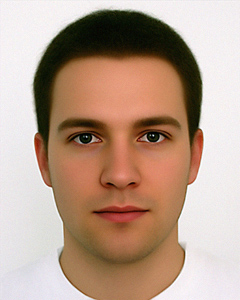
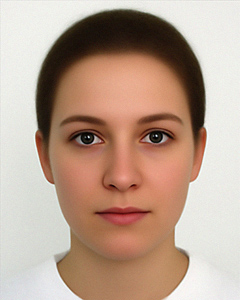
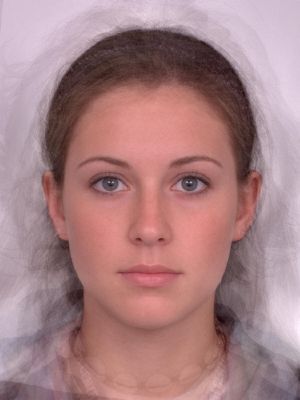
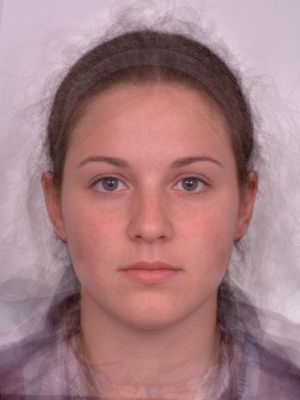
There is a lot of literature on prototypes and exemplars and research supporting the same. One such research is in the case of Visual perception of faces, whereby it is posited that we find average faces attractive , as the average face is closer to a prototype of a face, and thus, the similarity calculation needed to classify an average face are minimal. This ease of processing, we may subjectively feel as attractiveness of the face. Of course, male and female prototype faces would be different, both perceived as attractive.


Alternately, we may be storing examples of faces, some attractive, some unattractive and one can theorize that we may find even the unattractive faces very fast to recognize/categorize.


With this in mind I will like to draw attention to a recent study that highlighted the past-tense over-regularization in males and females and showed that not only do females make more over-regularization errors, but also these errors are distributed around similar sounding verbs.

Let me explain what over-regularization of past-tense means. While the children are developing, they pick up language and start forming the concepts like that of a verb and that of a past tense verb. They sort of develop a folk theory of how past tense verbs are formed- the theory is that the past tense is formed by appending an 'ed' to a verb. Thus, when they encounter a new verb, that they have to use in past tense (and which say is irregular) , then they will tend to append 'ed' to the verb to make the past tense. Thus, instead of learning that 'hold', in past tense becomes 'held', they tend to make the past tense as 'holded'.

Prototype theories suggest, that they have a prototypical concept of a past tense verb as having two features- one that it is a verb (signifies action) and second that it has 'ed' in the end.

Exemplar theories on the other hand, might predict, that the past tense verb category is a set of exemplars, with the exemplars representing one type of similar sounding verbs (based on rhyme, last coda same etc). Thus, the past tense verb category would contain some actual past tense verbs like { 'linked' representing sinked, blinked, honked, yanked etc; 'folded' representing molded, scolded etc}.

Thus, this past tense verb concept, which is based on regular verbs, is also applied while determining the past tense of irregular verb. On encountering 'hold' an irregular verb, that one wants to use in the past tense, one may use 'holded' as 'holded' is both a verb, ends in 'ed' and is also very similar to 'folded'. While comparing 'hold' with a prototype, one may not have the additional effect of rhyming similarity with exemplars, that is present in the exemplar case; and thus, females who are supposed to use an exemplar system predominantly, would be more susceptible to over-regularization effects as opposed to boys. Also, this over-regularization would be skewed, with more over-regularization for similar rhyming regular verbs in females. As opposed to this, boys, who are usinbg the prototype system predominantly, would not show the skew-towards-rhyming-verbs effect. This is precisely what has been observed in that study.

Developing Intelligence has also commented on the same, though he seems unconvinced by the symbolic rules-words or procedural-declarative accounts of language as opposed to the traditional confectionist models. The account given by the authors, is entirely in terms of procedural (grammatical rule based) versus declarative (lexicon and pairs of past and present tense verb based) mechanism, and I have taken the liberty to reframe that in terms of Prototype versus Exemplar theories, because it is my contention that Procedural learning , in its early stages is prototypical and abstractive in nature, while lexicon-based learning is exemplar and particularizing in nature.

This has already become a sufficiently long post, so I will not take much space now. I will return to this discussion, discussing research on prototype Vs exemplars in other fields of psychology especially with reference to Gender and Hemisphericality based differences. I'll finally extend the discussion to categorization of relations and that should move us into a whole new filed, that which is closely related to social psychology and which I believe has been ignored a lot in cognitive accounts of learning, thinking etc.

Sphere: Related Content

Tuesday, November 28, 2006

The Two Cultures continued

While my original post regarding the two cultures of Schizophrenia and Autism was a reference to the Arts and Science cultures of CP Snow, this post is about the cultures in the traditional sense- the American culture pitted against the East Asian culture.


To recap the differences in Autism and Schizophrenia, the difference could be summarized as a linear, literal, realistic, detail-oriented and routine -bound thinking style in Autism and a non-linear(parallel), metaphorical, imaginative, meaning-oriented and novelty preferring thinking style associated with schizophrenia. One of the prime reasons for these differences was hypothesized to be a central coherence tendency in autism (too much focus on foreground and piece-meal perception/ conception) on the one hand and a contextual, broad and loose association tendency in schizophrenia (too much focus on background and a gestalt and holistic sort of perception/ conception) on the other hand.

One can even go a step ahead and characterize the autistic cognitive style as Analytical and the schizophrenic style as Holistic in nature.

That brings us to an interesting hypothesis. It is well known that cultures differ in their cognitive thinking style and it has been demonstrated in a number of studies that the American culture is characterized by an analytical thinking style, while the East Asian cultures are characterized by a holistic cognitive style.

This cross-cultural differences in cognitive style, as popularized by Richard Nisbett'’s book The Geography of Thought, has been found to be displayed in perception ( differences exist in change-blindness based on foreground/background salience and this also correlates with the differential patterns of eye fixations on background/foreground in the two cultures) , in categorization and representations(with either a style based on ecological or habitat-based thinking dominant or a one based on narrow self focus and goal-directed thinking dominant), in thinking (analytic vs holistic thinking), in reasoning about causes ( limited, direct causes vs. a large number of indirect causes) and recently in reasoning about consequences ( with western culture favoring a more direct consequence on an immediately succeeding event and the eastern cultures favoring more indirect consequences on more futuristic events and event effects on the the ultimate outcome).

Various theories have been proposed for these differences including a fear of isolation theory that posits that difference in dialectical vs analytical thinking or the reliance on context for memory recognition is due to the fear of social ostracizing, which causes one to focus more on context; a complex and ambiguous physical environment theory which in a roundabout (and in my view in a flawed) way argues that differences in complexity and ambiguity of towns and city scenes of the two cultures cause the different thinking styles rather than it being the other way round; to this being due to linguistic effects (just like this study which shows that linguistic differences cause changes in spatial cognition, I'm sure there are studies that attribute the different cognitive styles to linguistic effect) or due to genetic differences.

While I will not address the reasons for the differences, I will take as granted the fact that there are reasonable differences in the cognitive style on the figure-ground, details-gestalt and analytical-holistic dimensions and these dimensions are more or less the same sort of cognitive style differences that one sees in schizophrenia and autism.


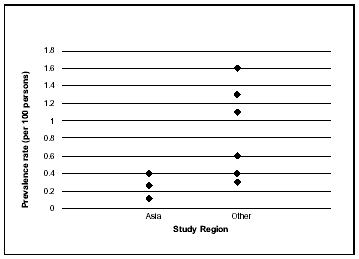
Consistent with this cultural trend, one can predict that in cultures which favor divergent, contextual and holistic thinking , a schizotypal subject would be less susceptible to be labeled as a mentally ill person. These cultures would be more tolerant of this form of thinking and more accommodating of the extreme manifestation. consequently one can hypothesize that in East Asian cultures the incidence and prevalence of Schizophrenia would be way below that in American cultures. This is actually the case with lifetime prevalence in Asian countries being 0.25 as opposed to 0.88 for non-Asian countries.

A reverse trend would be expected in Autism, with American children being diagnosed with autism lesser than the Asian cultures. The results for this prediction are not that optimistic as data on autism prevalence in china is not readily available; but Japanese show an upward trend, while American incidence levels seem to have actually decreased over the years.

Thus, it may actually be the case that autism and schizophrenia signify the Two Cultures.

Before I part, just a parting note on the recently discovered Television and Autism linkage. John Hawks, had commented on the eye movement cultural differences study and in its context had hypothesized that the reason for differences in cognitive style with Americans focusing on the foreground object may be due to the high prevalence in America of cartoon TV viewing which causes one to focus on a one moving object, against a static background.

But let's consider what some of those cultural reasons might be. For example, have American graduate students watched cheaply-animated cartoons for a greater proportion of their lives. You know, the kind of cartoon where the only moving object is the main character, and the background is entirely static for minutes? For that matter, does television viewing in general affect attention.


To me this hypothesis of TV-cartoon viewing and the consequent figure-focus or central coherence seems very promising and might be the reason as to why Autism is rising with increased TV viewings.

Sphere: Related Content

Monday, November 27, 2006

Synapse issue 12 now available

The 12th edition of Synapse is now available at Dr. Deborah Serani's blog.

One of my favorite includes the recent prion-like nucleation-polymerization reaction that has been found in beta Amyloid proteins (whose aggregation results in plaques in Alzheimer's). Although, the polymerization reaction and spread-by-shape mechanism was seen only in those who were genetically susceptible to Alzheimer's and the effect was very specific (thus ruling out infection hypothesis), yet this spread-by-shape may explain some of the prognosis of the illness following the initial trigger.

With some recent new studies indicating that some picornavirus strains my affect memory, an infection triggering hypothesis, followed by malignant spread due to spread-by-shape-mechanism-of-prions in those genetically susceptible may help explain the disease etiology.

Prion mechanism, has been hypothesized as having evolved to prevent cannibalism. Thus, the genes that confer vulnerability to TSE seem to have been fixated in humans; in the case of Alzheimer's the evolutionary rationale may be similar and may have arisen to prevent cannibalism of old family members or even old animals in general. If an infected senile animal, on consumption, confers disease vulnerability on the human who has consumed the meat, then this sort of behavior too may be selected against. As in India (a predominantly vegetarian country), the prevalence of Alzheimer's disease among 70- to 79-year olds is 4.4-fold less than that of the United States, I am tempted to consider the possibility that some of the triggering of Alzheimer's may be due to infected senile-animal food consumption.

Sphere: Related Content

Thursday, November 23, 2006

Schizophrenia and Autism: The Two Cultures.

Mind Hacks has highlighted two posts from the BPS Research Digest that highlight the work of Daniel Nettle, related to Scizotypy and evolutionary benefit especially the linkages between schizotypy and artistic creativity.

To recap the schizotypy dimensions:

  1. Unusual experiences: The disposition to have unusual perceptual and other cognitive experiences, such as hallucinations, magical or superstitious belief and interpretation of events . In the clinical form manifests as positive symptoms of hallucinations and delusions.
  2. Cognitive disorganization: A tendency for thoughts to become derailed, disorganized or tangential. In the clinical form manifests as the positive symptoms of disorganized speech and flight of ideas.
  3. Introverted anhedonia: A tendency to introverted, emotionally flat and asocial behavior, associated with a deficiency in the ability to feel pleasure from social and physical stimulation. This manifests clinically as the negative symptoms of flattened affect,alogia and avolition.
  4. Impulsive nonconformity: The disposition to unstable mood and behavior particularly with regard to rules and social conventions. Manifests clinically as disorganized and socially inappropriate behavior like dressing inappropriately.


To summarize the key findings of the first Nettle paper:

  1. Unusual Experiences dimension (in general population) correlated positively with number of partners and mating success. This relationship was mediated by creative activity. Thus, unusual experiences are hypothesized to lead to creative activities, which in turn increase reproductive fitness.
  2. Impulsive Nonconformity had a direct positive correlation with number of partners and mating success. It independently led to increase in reproductive fitness and the effect was not mediated via creative activity.
  3. Introvertive Anhedonia decreases creative activity, and also has a direct negative effect on mating success.
  4. Cognitive Disorganization seemed to had no significant effect on mating success.
  5. Thus, while part of the reason for continuing prevalence of schizophrenia/schizotypy may be explained by the direct effect of Impulsive Non-conformity on Mating Success, the other part can only be explained by the benefits of creative activity that are conferred by Unusual Experiences.

As Introverted Anhedonia has a negative effect on both creative activity and mating success, it seems reasonable to posit, that while schizophrenia patients may suffer from the negative interaction between Unusual Experiences and Introverted Anhedonia; some of their relatives may benefit from the unusual experiences, while being spared from the effects of Introverted Anhedonia, and thus be specially selected for mating success that is mediated by creative activity. This creative advantage that the relatives of schizophrenia have, may have led to the fixation of this disorder in humans.

The second nettle paper explores the relationship between schizotypy and artistic creativity. the key finding here are:

1. Poetic creativity:
  • Unusual Experiences score increase in a significant manner from non-poets, to hobbyists to serious poets. It slightly decreases with professional poets.
  • The same trend is shown by Impulsive Nonconformity and Cognitive Disorganization.
  • Introverted Anhedonia, on the other hand, shows a non-significant trend to decrease with increasing creative activity.
2. Visual art creativity:
  • The trends for Unusual Experiences, Impulsive Nonconformity and Cognitive Disorganization are the same as in case of poetry, the only difference being that Cognitive Disorganization trend is not significant.
  • Introverted Anhedonia, on the other hand, shows a significant trend to decrease with increasing creative activity.
3. Mathematical creativity:
  • The trends are opposite to that of poetic and visual arts creativity in this case.
  • The scores for Unusual Experiences, Impulsive Nonconformity and Cognitive Disorganization decrease with mathematics engagements level.
  • The scores for Introverted Anhedonia, increase and correlate with mathematical activity.
4. The conclusion is that schizotypal traits like Unusual Experiences, Impulsive Nonconformity and Cognitive Disorganization are instrumental in creative thinking and thus have beneficial effects of stimulating creativity. Though the effect size of Unusual Experiences is the strongest, other traits also have significant effects. Increasingly serious creative engagement is associated with a decrease in introvertive anhedonia and this negative trait is thus a liability.

The authors thus conclude:

The findings provide some support for the two-factor model of Barron (1972). Creative groups are as high as patients on unusual experiences and cognitive disorganization, but lower than controls on introvertive anhedonia. Thus, artistic groups and psychiatric patients share divergent thought, but they differ in that the latter are troubled with negative symptoms such as avolition and anhedonia, whilst the former are unusually free of these traits. This is also congruent with Schuldberg's findings that creativity scores are positively correlated with scales of positive psychotic or hypomanic symptoms, and negatively.


This, the author had hypothesized earlier in the paper, might be an alternative to an inverted-U model of benefits provided by Schizotypal traits.:

An alternative possibility comes from the two-factor approach of Frank Barron. Barron (1972) argued that successful creativity combines deviant and psychopathological traits with high scores on measures of 'Ego strength'. Ego strength includes resilience, ability to cope with stress, self-control and high levels of experienced well-being. Ego strength is thus a mediating factor that determines whether schizotypy is translated into damaging symptoms or healthy creative output. Schuldberg's(1990) work is relevant to this model, finding as it does that scales based on positive symptoms correlate positively with creativity scores, whereas scales based on negative symptoms correlate negatively. Thus, a lack of negative symptoms would appear to be equivalent to high 'Ego strength' in Barron's terms. The prediction in terms of the O-LIFE dimensions would therefore be that creativity would be associated positively with unusual experiences but negatively with introvertive anhedonia.


He further tries to correlate this with the 'systemising' theory of autism:

This profile supports the picture of the mathematical mind as having opposite features to the artistic one, with a narrow range of associations (low unusual experiences), an interest in order (low cognitive disorganization), and in routine (low impulsive nonconformity). These findings are consonant with Baron-Cohen's work on systemising as a core feature of autistic spectrum disorders. Systemising is a cognitive style characterized by a drive for order and regularity, which is elevated in high-functioning autism and in mathematics and engineering (Baron-Cohen et al., 2003; Baron-Cohen et al., 2001). The constellation of autism, systemising and science appears to be in many respects the opposite tail of the distribution to the constellation of arts, unusual experiences and affective and psychotic disorders explored in the present study.


The authors, also present the following theory of autism:

Autistic traits are in many ways the converse of the unusual experiences component of schizotypy. Whereas schizotypal thought is characterized by often metaphorical leaps from domain to domain, remote associations, and broad attentional set, autism is characterized by narrow interests and liberality, with occasionally highly developed abilities in tasks requiring systematic and convergent thinking.


I believe they have stumbled on a very important conceptualization. I myself had been contemplating the Schizophrenia- Autism linkages for quite some time. In my view, the contention that Schizophrenia reflects aspects of artistic creativity, while Autism may reflect aspects of mathematical creativity is a positive diversion form the usual male/female systematizing/empathizing spin on Autism. It is instructive to note, that while Autism is a predominantly male illness, prevalence of Schizophrenia too, is greater in Males compared to females. thus, a simple Male- Female dichotomy does not work.

I do believe that there are theory-of-mind deficits in Autism and these are responsible for their social difficulties, and this may be the opposite of the empathetic brain, but that deficit in empathy should not be construed as equivalent to a positive endowment with systematic thinking. In my view, the empathy defect is independent of the other defects like communicative and repetitive and stereotyped behavior defects. The empathy defect has to do with emotions and feelings, while the other defects might be cognitive and behavioral in nature.

Both Schizophrenia and Autism are spectrum disorders, and hence we will consider differences between the spectrum.

Let me now address the differences in Autism and Schizophrenia spectrum :

  1. Literal vs Metaphorical thinking. One of this blog's reader, Mrs Mc Ewen, had recently left a comment on this site and I discovered that she is a mother of two autistic kids and maintains a blog related to that. I found one of the entries related to Literal interpretation in autism both humorous, informative and sad at the same time. On the other hand, I am well acquainted with the metaphorical thinking indulged in by schizophrenics (I've written a sort of Novella that revolves round that theme), and as I find the Conceptual Metaphor Theory for linguistic semantics full of promise, I have no trouble understanding the language developmental delay in Autism, or the literary/ artistic creativity of Schizotypal pro band. After all, much of art is using symbolism, metaphor etc and involves non-literal interpretation. This difference alone can account for the communication deficits faced by Autistic children. This is related to the schizotypy dimension Unusual Experiences.
  2. Convergent Vs Divergent thinking: Schizophrenia spectrum is marked by cognitive disorganization, flights of ideas and looses associations. It is also marked by including too much of context and in pathological cases characterized by an effort to relate each and every happening to some preexisting context (if the context is of Paronia- every event is a conspiracy; if the context is of grandeur, every event is significant and referring to self). Autistic spectrum, is not only marked by the absence of these and a low score on the corresponding schizotypal trait; but by an opposite tendency of Central Coherence. there is some research that indicates, that Autistic children show both perceptual and conceptual central coherence: i.e. a tendency to only focus on one piece at a time and an inability to use gestalt perception or conceptualization whereby one could indulge in a top-down 'imaginary' assembly of fragments to identify an object. thus, they take , too little of context, in my view and make lesses association than desired. One can also hypothesize, that would yield lesser scores than controls and definitely lesser scores than schizophrenics on the unusual/ novel object uses task. This may also partially explain symptoms like circumscribed and specialized interests in autism. This is related to Schizotypy dimension Disorganized Thinking.
  3. Reality vs. Fantasy (imagination) orientation: This relates to whether one has an ability to indulge in make-believe or in activities like pretend play. I believe that this propensity to use imagination may be linked to the unusual experiences like hallucinations that are found in schizophrenics. Magical thinking, involving endowing inanimate objects like Voodoo dolls or lucky charms, with causative powers may be converse of the autistic inability to differentiate between animals and inanimate objects, or to easily learn to distinguish between self-intended motion of a human/ animal and a pushed or caused motion of an inanimate object. It is instructive to pause here, and reflect, that much of human Agreeableness and Empathy also has to do on make-believe. One may not always love one's friend, but out of respect and social courtesy, one would always pretend to do so. The reality orientation of autistic children, (apart form any empathy/ mirror neuron defects) may also underlie their social difficulties like inability to make friends and impaired social play. This is related to the schizotypy dimension Unusual experience.
  4. Routine and order Vs. Novelty preference: Autistic children are characterized by repetitive and stereotyped behavior. Schizophrenia spectrum on the other hand is high on Openness to Experience and usually display preferences for reckless, novel, socially inappropriate and sensation seeking behavior. This difference may underlie the stereotyped behavior like rigidity exhibited by autistic children. This is related to schizotypy dimension Impulsive, Nonconformity.

Overall, one possible mechanism underlying these differences can be a sensori-motor and conceptual gating defect in both the disorders- with schizophrenia signifying a very broad sensori-motor and conceptual gate with consequent broad attentional span, loose associations and too much of context; and Autism representing a very narrow spatial and temporal gate with consequent specialized interests and focus, few associations, literal and convergent thinking.

If one couples this with the phenomenon of pre-pulse inhibition (defect of schizophrenia) , then it may be theorized that as a schizophrenic would interpret all stimuli in a novel way (presentations of a stimuli earlier, does not lead to its memory or the suppression of the startle response), hence it would also develop preference for, or at least not be intimidated by, a novel item. On the other hand, due to the smaller sensory gate, and normal PPI, the autistic children would mostly be exposed to the smae stimuli over and over gaian and may develop a preference for it over any new stimuli which, when gated through its small gate, would cause it to get startled. I am even tempted to theorize that autistic children may have a high PPI than normals, but a quick Google search didn't corroborate my speculations.

Lastly, a discussion of Anhedonia, and how that interacts with positive schizotypy and autism will need some more thinking and conceptualization. For now, I am tempted to posit that Anhedonia may be one of the dimensions of the female counterpart of Schizotypy-Autism thinking styles. Females, I believe, are more prone to depression (the primary correlate of Anhedonia) and maybe just like a Schizotypy-Autism spectrum that is along cognitive thinking styles; there might exist a Depersonlization-Bipolarity spectrum that runs along the emotion-motivation feeling styles and may reflect the two fundamental styles of emotional processing- one involving use of too much emotion and motivation (bipolarity) and the other characterized by lack of emotion and motivation (depersonalization).

While creativity (thinking) of both types (scizotypal-autistic or artistic-scientific), might have been selected by sexual selection in males; the corresponding traits that would be under sexual selection for females might be virtue/aesthetics (feeling) of both types: one subjective and based on personal constructs of emotions and motivations and the other objective and based on utilitarian concerns and needing one to put aside one's own feelings and emotions.

Just a speculation. Do let me know, your views and opinions (or any supporting researches)!


Sphere: Related Content

Wednesday, November 22, 2006

Five Minds, The Big Five and the Five Faces of the Genius

Howard Gardner, is currently promoting his new book, Five Minds for the Future, and more information about the same is available here.

The five minds—disciplined, synthesizing, creating, respectful, and ethical—differ from multiple intelligence in working in a more synergistic fashion as opposed to separate categories of intelligences.

The “disciplined mind,” Gardner argues, is not simply knowing a particular subject but “learning to think the way people who are experts in the field think,” and should develop by the end of secondary school.

The second type of mind, the “synthesizing mind,” is defined by “deciding what to focus on, what’s important, what to ignore, and putting that together in a way that makes sense.” With a dearth of information about synthesizing in textbooks, Gardner has become most intrigued by this concept. Gardner considers himself primarily a synthesizer, but now as a “fish that has suddenly discovered he’s in water,” Gardner is faced with the challenge of uncovering what goes on as people synthesize, what is good versus bad synthesis, and how to enhance the process.

Discussing the creative mind, Gardner points out that today “creating is a premium and not an option.” While one needs a certain amount of discipline and synthesizing to create, too much of either will stifle creativity.

To foster creativity in the classroom, Gardner recommends that teachers “model novel approaches and answers to questions and indicate [to students] that those responses are legitimate.” Students should be encouraged to come up with innovative approaches, discussing ideas that did not work and alternative models. There should also be study of “examples of creative ideas, actions, behaviors,” figuring out how success was attained, and what obstacles had to be overcome.

While the first three minds are more cognitively oriented, the last two, respect and ethics, have more to do with personality and emotion. The respectful mind, Gardner indicated, has to do with “how we think and relate to other people, most importantly to other people around us.”

While this mind develops at a relatively young age, a kind of intuitive altruistic sense of reaching out to those around us, “attempting to understand differences and work with them,” the ethical mind is more abstract, and generally develops during adolescence. It has to do with fulfilling one’s responsibility in the world in terms of job role and as citizen, thinking in terms such as: “I’m a teacher…journalist…physicist, carrying out that role in the most professional way I can.”

Although, Gardner thinks that only the last two types of mind are related to personality and emotion, I believe that the first three types of 'cognitive' minds can also be related to personality types, as it is my contention that personality dimensions are just different styles of cognition and emotion.

I would thus like to draw attention to the parallels here, with the big five personality traits or the factors of the Five-factor model (OCEAN)

The disciplined mind utilizes the Conscientiousness traits of self-discipline, carefulness, thoroughness, orderedness, and deliberation to develop the thinking style marked by mastering the conventional way in which the experts familiar with the domain usually think.

The synthesizing mind, utilizes the Neuroticism traits that basically refer to an ability or inability to deal with environmental stimuli in a meaningful way. While discussions of neuroticism are usually couched in emotional terms-more reactive sympathetic nervous system, and more sensitivity to environmental stimulation - I also belive that there is a cognitive dimension here, that pertains to whether one reacts to all and every stimulus (information) or is more 'cognitively calm and composed' and uses deliberation in sorting the relevant information from irrelevant one rather than reacting to every little information nugget. This precisely is the synthesizing mind - able to focus on what is important and the ability to not get burdened by information overload. This is the emotional equivalent of not getting overwhelmed by environmental stress.

The creative mind, I believe, utilizes the Openness to Experience traits like unconventional and individualistic beliefs,broad interests, novelty preference and imagination to indulge in a thinking style that is marked with creativity- the ability to create something novel.

The respectful mind, utilizes the Agreeableness traits of consideration, friendliness, generosity, helpfulness and concern with cooperation and social harmony to indulge in a thinking style that is imbibed with an altruistic sense of reaching out to those around us, “attempting to understand differences and work with them."

The ethical mind, on the other hand, utilizes the Extraversion traits of enjoying human interactions, enthusiasm, talkativeness, assertiveness, gregariousness and pleasure in social interactions to indulge in a thinking style marked with emphasis on activity and social role and responsibility - the precise recipe for the ethical mind!

Gardner also proposes a relationship/ hierarchy between the five minds.

In the latter part of his book, Gardner explores the interaction between five minds. He doesn’t see them as isolated categories, but as a general taxonomy followed by respect before ethics, discipline before synthesis, ultimately creating.

This implication of a developmental framework, in which the order of development is - discipline, synthesis, respect, ethics and creativity - maps very well to my own obsession with a five stage developmental model of cognitive, moral, perspective-taking, linguistic , symbolic, pretend-play and other abilities. I believe that Gardner has got the order wrong, and the traits (and the Five minds) develop in the following order- Neuroticism, conscientiousness, Extraversion, agreeableness and finally Openness to Experience. I may be wrong here, but I would write in detail on my rationale for this developmental path in a subsequent post.

While it is reasonable to stop here, I am tempted to take the analogies further and link this up with the Five Faces of the Genius.

To me, the Fool epitomizes perseverance and thus a Disciplined and Conscientious mind.

The Observer epitomizes ability to pick a needle from a haystack and thus a Synthesising and a low Neurotic (cognitively stable) mind.

The Alchemist, with its focus on active bridging and connection between domains, seems to reflect an ethical and extraverted mind.

The Seer, with an ability to imagine and visualize, may have a corresponding capacity to imagine and feel other;s emotions and this empathy leading it to have a respectful and Agreeable mind.

The Sage, with its ability to simplify, may find a resonance in the openness traits of 'preferring the plain, straightforward, and obvious over the complex, ambiguous, and subtle' and may be linked to the creative and Open mind!

Do let me know, how you find these conjectures and linkages. I hope I am not using the analogical reasoning of the alchemist to an unacceptable extreme!! Even if I am, you can be sure that it is just due to my high energy levels and my ethical concerns!!

Sphere: Related Content