Monday, November 20, 2006

Encephalon 11: for Prime Time Viewing only!!

Hi,

I am Sandeep Gautam, your host for tonight, and it is my pleasure to walk you through this brand new episode of the brain carnival called Encephalon.

Before I start, my co-host for tonight, Caroline from the SharpBrains blog, would like to request you to turn off the music, unplug your headphones and concentrate solely on the stories presented in this carnival, to the exclusion of everything else. She recently found that we have limited attentional capacities and that is the reason why we turn down the radio, when we are lost and trying hard to find the correct route. Its common knowledge, that browsing through a collection of cutting edge science posts, from around the world, can be quite taxing on your attentional capacities and there is no room for divided attention here. For those addicted to music, she has some advice to offer - do a simple multitasking task at first and practice before moving on to this more complex task. So all you music addicts are advised to read the mouse trap archives (which evidently don't require much processing or brain use at all) and practice on that easier task first!!

Let me now start with a short recap (Did you every watch a show that didn't have a 'short' recap?). Last time the Mouse Trap hosted a carnival (Synapse #6), we took the readers on a historical journey , where staff correspondent The Neurophilosopher, recounted the story of how Neurons were discovered. That show went on to create history (it is one of the most viewed and popular story on the Neurophiliosopher's blog). This week the Neurophilosopher continues his historical voyage and explores how the nerve function and structure were discovered. While the initial enchantment with the 'animal spirits'/ 'humour' theory led to the emergence of related concepts like the Sanguine, Choleric,Phlegmatic and Melancholic temperaments; the latter day intoxication of Descartes with spirits, was instrumental in the emergence of the hydraulic metaphor for brain/ nerves/ emotions. The conceptualization of nerves, starting from 'hollow tubes', to that of conductors of 'animal electricity', to the modern notions of synaptic chemical transmission and voltage gate function of ion channels has involved the joint effort of many outstanding luminaries, endowing Noble prizes, on three pairs of scientists, along the way. It is also heartening to note, that Andrew Vesalius, in his 'On the Fabric of the Human Body', was not haunted by the animal spirits and was able to take a more rational stand. That may explain why he is one of the authors making it to the shortlist of 25 best science books ever.
(This edition of Encephalon is going very good by far: I have already managed to plug in references to some of my own posts!!)

We all love a good debate , don't we? While it has become increasingly unnecessary to defend evolution against the tirade of Intelligent Designers/ Creationists, yet someone has to take the cudgels, every now and then, and expose the IDers for what they are . In the Debunking section, PZ Myers, of the Pharyngula, responds to the continuing fascination of IDers with the Eye as a designed object, and drives home the point that the presence of shared, deep elements in the diverse and different types of eyes found in the natural world, is reflective of a common descent. He starts off with an article on A Panda's thumb, that argues that the backward layout of vertebrate eye (with nerves and blood vessels placed before the photorecpetors and in the path of incoming light) is a bad design and a quirk of evolutionary history and does not confer any said advantages like the 'cooling of retina'. While PZ Myers, concedes the possibility that an imperfect design and multiple types of eyes, can still be explained by IDers as the result of an Incompetent Designer (on the other hand one can argue that the fact that there are so many different kinds of eyes, each suited to the organism that has it, is proof of a watchmaker, that designs different watches for different needs- a sports watch for trendy youths, a classical gold -plated watch for aged people, and a gizmo-heavy watch for the geek) , he shows that the shared elements (opsins) in the rhobodermic (invertebrate) and cilliary (vertebrate) eyes point towards a common historical descent and are part of the same phylogenetic tree. This makes evolution as the prime candidate for explanation of eye features as they exist. Interesting to note, that c-opsins are also present in the invertebrates and used in Circadian rhythms, while r-opsins are also found in vertebrates and are implicated in circadian rhythm resetting. Well, IDers can still use this as an ammunition for their theories: claiming that the r-opsins in humans is the mythological Shiva's Third Eye. One can play the devil's advocate (I like this part and would gladly do the honors) and claim that two types of eye systems -one r-based, the other c-based are also logical outcomes of physical facts- just like two systems of watches exists - analog and digital - so also do the physical facts of perception decree that 2 types of eyes can be possible - one r-based and the other c-based - and their presence in vertebrates and invertebrates does not point to common descent, but only spurious relationships. I'll let PZee thrash these arguments in his next posting.

Meanwhile, we keep pipping Mythbusters to the post, with vigilant reporters not only debunking the old and haunting myths (like that of a non-blind watchmaker), but also actively nipping in the bud, new myths as they are being formulated and proposed. One such myth is that of exaggerated differences in Male and Female brains and abilities, and Jake Young from Pure Pedantry has covered this earlier too. This time, he returns to examine the extreme, 'male brain', systematizing theory of Autism, and concludes that if extreme male interests/abilities are indeed a symptom of autism, then in the light of the fact that male-female differences are largely socio-cultural, while autism is largely genetic, one can only conclude that the differences in systematizing are an epiphenomena, and not a cause. Moreover, the theory of assortative mating that Simon Baron-cohen proposes , as well as his emphasis on systematizing, to the exclusion of the other major symptoms of autism like social and communicative difficulties, appear lacking and non-comprehensive. Repetitive behavior can be adequately explained by systematising, but how can something as elementary as eye contact aversion follow from geekiness or nerdness of the autistic boy and be a consequence rather than a cause?

While the theory of Autism may be quite controversial and how to help children with Autism not clear, yet for the normal , anxiety and stress- driven, school-going child, we have some hope. They can now cope with the stresses, increase focus and manage emotions, all by themselves. Alvaro, from the SharpBrains blog, reports on an exciting biofeedback program that has managed to improve the performance of children appreciably by providing them feedback about their own stress levels -measured as heart rate variability- and encouraging them to use meditation techniques like Yoga to calm down in stressful situations.

Ok folks, Its time to take a break! See you after the commercials! (All good programs do have commerical breaks!)

But in this commercial break, you will not be flooded with Advertisements that purport to increase your ------ to double its size. (Hey guys, what are you thinking, that ----- was to be filled with a brain muscle name. I can assure you the reference was in no way related to 'what the normal male thinks about every 2 minutes'!)

Instead, in this break, Joe Kissel , of the Interesting Thing Of The Day blog, would like you all to take a Power Nap. No need to watch the commercials. Just take a short power nap- and return rejuvenated - with improved memory, attention and cognitive performance. If sleeping is not your cup of tea, resort to Power Blogging (do remember to quote me if you use this term, I invented it just now!) instead. Fernette and Brock Eide at the Eide Neurolearning blog, report on how blogging increases various cognitive abilities like critical, associational and analogical thinking. But just like the Power Nap, keep your Power Blog posting of a reasonable length. While a long nap would leave you groggy and unable to work, a long post may not have the same effect on you, but would definitely end up making your readers groggy and distracted. believe me, I know from personal experience!

Ok, Welcome back! After the break, we take you out from our studio, and into the fields, where actual stuff happens. Our special correspondent, Chris Patil, of Ouroboros blog, was covering the annual scientific meeting of the Larry L Hillblom Foundation, and reports straight form the filed on the strategy of passive immunization for Alzheimer's. The procedure involves giving the antibodies, that target amyloid Abeta oligomeres, directly to the patients. Interestingly, these antibodies also target IAPP, thought to be instrumental in type II diabetes and may offer some help in curing that disease too. As the prevalence of Diabetes in India is quite high (and as I have a family history of this disease), I'll surely be following the developments here.

Its show time folks! Michael, from the Peripersonal space, presents a retrospective of Charles and Ray Eames film and multimedia work. The makers of such films like the Powers of Ten they are also famous for the creation of the Eames chair and frequently employed and incorporated the latest cognitive psychology concepts in their films and presentations. For example, in their Rough sketch for a sample lesson of a hypothetical course, they not only made efficient use of visuals and sounds (loud enough to make you feel vibrations), but also incorporated smells piped through the ventilation system. The effects were striking, with people smelling oil when seeing it, when no odor was actually present, but because they expected a smell just like they had received for the other scenes.

Odor is strongly linked with memory, and as Vaughan from the Mind Hacks blog, had highlighted, the retronasal olfactory system is also strongly linked with Flavor or Taste Perception. So, with the correct use of technology, (flavor odors presented when people gasp after seeing a visual and are exhaling air and are thus using retro nasal system), one can even induce the sense of taste. When sight, sound,smell, touch (vibrations due to loud sounds) and flavors are combined in a presentation, I am sure the results would be terrific.

Michael, specializes in peripersoanl space and the associated proprioception sense, so I am sure we can even include proprioceptive, vestibular and kinesthetic effects in the future presentations! Meanwhile, Michael continues on his exploration of psychological themes and concepts in Charles and Ray Eames work, and proposes that the reason they used seven simultaneous screens in Glimpses Of USA, may have been partly due to the known 7+-2 limits of the working memory and how having seven screens would force viewers to sample from all of them without being overwhelmed.
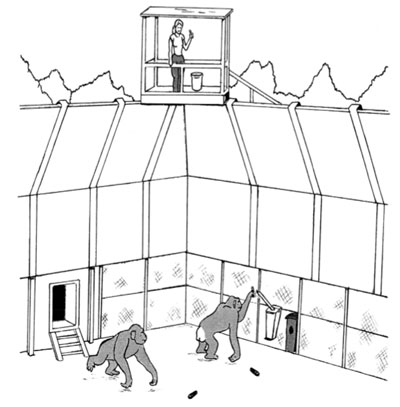
While we are talking about show business, let us also indulge in some celebrity gossip. Everyone knows that the alpha male in chimpanzees, is equivalent to the human celebrity, but nobody had though that chimps too indulged in celebrity worship. Olivier, from the AplhaPsy blog, reports on how his job as a paparazzi, was finally rewarded, when he came across a striking conclusion - that the other chimps, when they were replicating a social-convention, were not actually learning a convention at all. They were just imitating the celebrity, the alpha male, and that the conclusions derived about a theory of mind or social-convention learning in chimps, based on this experimental setup, are flawed.

In our chat section, Alvaro from the SharpBrains blog, makes some Hard Talk with Dr Brett N Steerbarger, who has written extensively on trading and the psychology that is involved in improving trading behavior. They discuss how concepts of structured learning, continuous feedback, self motivation and developing an expertise in a niche are relevant in the context of improving trading performance. If you are a short term trader, you need to see patterns quickly and so need to increase your processing speed and working memory. For long term traders, analytical skills are paramount, while everybody can benefit from emotion management. Expert traders, like all experts in their fields, are a result of skills that are practiced, honed and fine-tuned, sometimes under the instructions of a coach. We are sure you would increase your trading capacities immensely if you took this advice seriously and indulged in some trader specific training. Don't forget to share your increased revenues with this humble blog at that time!!

While expertise, as a result of hard work, rather than training, is one of the most debated issues in Intelligence Psychology, another issue that keeps cropping is the nature of intelligence. Is there an underlying 'g' factor, or is the correlation between the IQ test explicable otherwise. Hugo, from the AlphaPsy blog has the second opinion and reports on a new paper that does away with an underlying 'g' and explains the correlation in terms of effects of one ability on the other.

In our last section (I can anticipate your relief!), we look towards the future and anticipate future trends. IB, from the Fibromyalgia Research Blog, reports on a recent study that found abnormal cerebral activation (increased neural recruitment) during cognitive tasks in Fibromyalgia and Chronic Fatigue Syndrome. He suggests that future study be focussed on finding the neurocognitive mechanisms underlying cognitive deficits like abnormally slow brain waves and sleep disturbances that are found in Fibromyalgia.
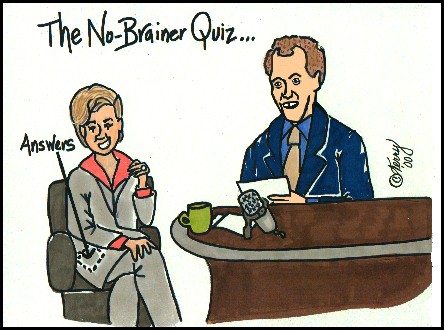
Before you leave, our sponsors, Dr Kavokin, from the Rdoctor blog, have some exciting gifts for you. Quickly answer a short quiz about low back pain and take home some cool prizes. While you can savor the quiz at your leisure, I would like to highlight question # 4 regarding whether smoking relieves the back pain or exacerbates it. That question has direct significance to us, as it indicates how mental attitudes affect physical illnesses. Rush in your entries or SMS TRUE/ FALSE on our hot line number 0000. You can also e-mail your answers to dump@junk.com. Exciting prizes like laptops, iPods and windows viruses are waiting for you!

Thats all for tonight. We will return in a fortnight's time, with the 12th episode of the Encephalon, same time, same day. Don't forget to tune in. Your hosts for that show would be Hugo, Olivier et al at the AlphaPsy blog . The day is 4th of December.

For now, please allow your host to thank all the behind-the-scenes persons - the actual contributors!! Thanks and good night!!

Sphere: Related Content

Friday, November 17, 2006

Encephalon 11: last call for submissions

The Encephalon #11 would be hosted right here on The Mouse Trap on the 20th of this month. So rush in your submissions as soon as possible. Just two more days left!! Send the best cognitive blog-posts from around the web to encephalon.host@gmail.com.

Looking forward to enthusiastic submissions.

Sphere: Related Content

Vote for your favorite science book ever

The discover magazine has unveiled its collection of 25 best science books ever and has also put up these books for online voting, whereby you can vote for your favorite science book from the 25 shortlisted, or vote for a book of your choice that is not listed.

Interestingly, Darwin's The Origin of Species wins hands down in the online voting; with only Newton and Einstein giving some challenge. Also, as many as ~15 % of voters have voted for books not in the shortlist. More interestingly, Freud has just been able to get an honorable mention!

The accompanying article by Kary Mullis is a nice read.

So what are you waiting for? Go ahead and vote for your favorite amongst such writers as Gould, Wilson and Dawkins (why do they shortlist so many evolutionary thinkers...and on a similar note why do we have so many blog postings on evolution, especially defending/proving evolution?) ..and then there is Oliver Sacks and James Watson too, so plenty of choices for the regular readers of this blog.


Tags:

Sphere: Related Content

Artificial Neural Networks: temporal summation, embedded 'clocks' and operant learning

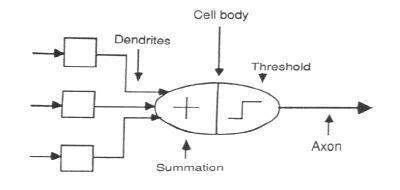
Artificial Neural Networks have historically focussed on modeling the brain as a collection of interconnected neurons. The individual neurons aggregate inputs and either produce an on/off output based on threshold values or produce a more complex output as a linear or sigmoid function of their inputs. The output of one neuron may go to several other neurons.


Not all inputs are equivalent and the inputs to the neuron are weighed according to a weight assigned to that input connection. This mimics the concept of synaptic strength. The weights can be positive (signifying an Excitatory Post-Synaptic Potential ) or negative (signifying an Inhibitory Post-Synaptic Potential).


Learning consists of the determination of correct weights that need to be assigned to solve the problem; i.e. to produce a desired output, given a particular input. This weight adjustment mimics the increase or decrease of synaptic strengths due to learning. Learning may also be established by manipulating the threshold required by the neuron for firing. This mimics the concept of long term potentiation (LTP).


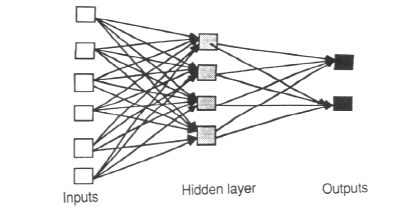
The model generally consists of an input layer (mimicking sensory inputs to the neurons) , a hidden layer (mimicking the association functions of the neurons in the larger part of the brain) and an output layer ( mimicking the motor outputs for the neurons).


This model is a very nice replication of the actual neurons and neuronal computation, but it ignores some of the other relevant features of actual neurons:

1. Neuronal inputs are added together through the processes of both spatial and temporal summation. Spatial summation occurs when several weak signals are converted into a single large one, while temporal summation converts a rapid series of weak pulses from one source into one large signal. The concept of temporal summation is generally ignored. The summation consists exclusively of summation of signals from other neurons at the same time and does not normally include the concept of summation across a time interval.

2. Not all neuronal activity is due to external 'inputs'. Many brain regions show spontaneous activity, in the absence of any external stimulus. This is not generally factored in. We need a model of brain that takes into account the spontaneous 'noise' that is present in the brain, and how an external 'signal' is perceived in this 'noise'. Moreover, we need a model for what purpose does this 'noise' serve?

3. This model mimics the classical conditioning paradigm, whereby learning is conceptualized in terms of input-output relationships or stimulus-response associations. It fails to throw any light on many operant phenomenon and activity, where behavior or response is spontaneously generated and learning consist in the increase\decrease \ extinction of the timing and frequency of that behavior as a result of a history of reinforcement. This type of learning accounts for the majority of behavior in which we are most interested- the behavior that is goal directed and the behavior that is time and context and state-dependent. The fact that a food stimulus, will not always result in a response 'eat', but is mediated by factors like the state (hunger) of the organism, time-of-day etc. is not explainable by the current models.

4. The concept of time, durations and how to tune the motor output as per strict timing requirements has largely been an unexplored area. While episodic learning and memory may be relatively easier to model in the existing ANNs, its my hunch that endowing them with a procedural memory would be well nigh impossible using existing models.


Over a series of posts, I would try to tackle these problems by enhancing the existing neural networks by incorporating some new features into it, that are consistent with our existing knowledge about actual neurons.

First, I propose to have a time-threshold in each neural unit. This time-threshold signifies the duration in which temporal summation is applicable and takes place. All inputs signals, that are received within this time duration, either from repeated firing of the same input neuron or from time-displaced firings of different input neurons, are added together as per the normal input weights and if at any time this reaches above the normal threshold-for-firing, then the neuron fires. This has combined both temporal and spatial summation concepts. With temporal summation, we have an extra parameter- the time duration for which the history of inputs needs to be taken into account.

All neurons will also have a very short-term memory, in the sense that they would be able to remember the strengths of the inputs signals that they have received in the near past , that is in the range of the typical time-thresholds that are set for them. This time-threshold can typically be in milliseconds.

Each time a neuron receives an input, it starts a timer. This timer would run for a very small duration encoded as the time-threshold for that neuron. Till the time this timer is running and has not expired, the input signal is available to the neuron for calculation of total input strength and for deciding whether to fire or not. As soon as the timer expires, the memory of the associated input is erased from the neurons memory and that particular input would no longer be able to affect any future firing of the neuron.

All timers as well as the memory of associated input signals are erased after each successful neural firing (every time the neuron generates an action potential). After each firing, the neuron starts from afresh and starts accumulating and aggregating the inputs it receives thereafter in the time-threshold window that is associated with it.

Of course there could be variations to this. Just like spatial aggregation/firing need not be an either/or decision based on a threshold; the temporal aggregation/ firing need not be an either-or decision: one could have liner or sigmoid functions of time that modulate the input signal strength based on the time that has elapsed. One particular candidate mechanism could be a radioactive decay function, that decreases the input signal strength by half after each half-life. Here, the half-life is equivalent to the concept of a time-threshold. While in the case of time-threshold, after a signal arrives, and once the time-threshold has elapsed, then the input signal is not available to the neuron at all, and while the time-threshold had not elapsed the signal was available in its entirety; in the case of radioactive deacy the inpiut signal is available till infinity in theory; but the strength of the signal would get diminisehd by half after each half-life period; thus making the effects of the input signal negligible after a few half-lives. Of course in the radioactive case too, once the neuron has fired, all memory of that input would be erased and any half-life decay computations stopped.

These are not very far-fetched speculations and modeling the neural networks this way can lead to many interesting results.

Second, I propose to have some 'clocks' or 'periodic oscillators' in the network, that would be generating spontaneous outputs after a pre-determined time and irrespective of any inputs. Even one such clock is sufficient for our discussions. Such a clock or oscillator system is not difficulty to envisage or conceive. We just need a non-random, deterministic delay in the transmission of signals from one neuron to the other. There do exist systems in the brain that delay the signals, but leaving aside such specialized systems, even a normal synaptic transmission along an axon between two neurons, would suffer from some deterministic delay based on the time it takes the signal to travel down the axon length and assuming that no changes in myelination takes place over time, so that the speed of transmission is constant.

In such a scenario, the time it takes for a signal to reach the other neuron, is held constant over time. (Note that this time may be different for different neuron pairs based on both the axon lengths involved and the associated myelination, but would be same for the same neuron pair over time). Suppose that both the neurons have very long, unmyelinated axons and that these axons are equal in length and provide inputs to each other. Further suppose that both the neurons do not have any other inputs , though each may send its output to many other neurons.

Thus, the sole input of the first neuron is the output of the second neuron and vice versa. Suppose that the thresholds of the two neurons are such that each would trigger, if it received a single input signal (from the peer neuron). As there would be a time lag between the firing of neuron one, and its reaching the second neuron, the second neuron would fire only after, say 5 milliseconds, the time it takes for signal to travel, after the first neuron has fired. The first neuron meanwhile will respond to the AP generated by the second neuron -which would reach it after (5+5= 10 ms) the round trip delay- and generate an AP after 10 ms from its initial firing.

We of course have to assume that somehow, the system was first put in motion: someone caused the first neuron to fire initially (this could not be other neurons, as we have assumed that this oscillator pair has no external input signals) and after that it is a self-sustaining clock with neuron 1 and neuron 2 both firing regularly at 10 ms intervals but in opposite phases. We just need GOD to initally fire the first neuron (the park of life) and thereafter we do have a periodic spontaneous activity in the system.

Thirdly, I propose that this 'clock', along with the concept of temporal summations, is able to calculate and code any arbitrary time duration and any arbitrary time dependent behavior, but in particular any periodic or sate/ goal based behavior. I've already discussed some of this in my previous posts and elaborate more in subsequent posts.

For now, some elementary tantalizing facts.
1. Given a 10 ms clock and a neuron capable of temporal summation over 50 ms duration, we can have a 50 ms clock: The neuron has the sole input as the output of the 10ms clock. After every 50 ms, it would have accumulated 5 signals in its memory. If the threshold-for-firing of the neuron is set such that it only fires if it has received five time the signal strength that is outputted by the 10 ms clock , then this neuron will fire after very 50 ms. This neuron would generate a periodic output after every 50 ms and implements a 50 ms clock.

2. Given a 10 ms clock and a neuron capable of temporal summation over 40 ms, (or lets have the original 50 ms time-threshold neuron, but set its threshold-for-firing to 4 times the output strength of the 10 ms clock neuron) , using the same mechanism as defined above, we can have a 40 ms clock.

3. Given a 40 ms clock, a 50 ms clock and a neuron that does not do temporal summation, we can have a 2000 ms clock. The sole inputs to the neuron implementing the 2000 ms clock are the outputs of the 50 ms and the 40 ms clock. This neuron does not do temporal summation. Its threshold for firing is purely spatial and it fires only if it simultaneously receives a signal strength that is equal to or greater than the combined output signal strength of 50ms and 40 ms neuron. It is easy to see, that if we assume that the 50 ms and 40 ms neurons are firing in phase, then only after every 2000 ms would the signals from the two neurons arrive at the same time for this 2000ms clock. Viola, we have 2000 ms clock. After this, I assume, its clear that the sky is the limit as to the arbitrariness of the duration that we can code for.

Lastly, learning consists of changing the temporal thresholds associated with a neuron, so that any arbitrary schedule can be associated with a behavior, based on the history of reinforcement. After the training phase, the organism would exhibit spontaneous behavior that follows a schedule and could learn novel schedules for novel behaviors (transfer of learning).

To me all this seems very groundbreaking theorizing and I am not aware of how and whether these suggestions/ concepts have been incorporated in existing Neural Networks. Some temporal discussions I could find here. If anyone is aware of such research , do let me know via comments or by dropping a mail. I would be very grateful. I am especially intrigued by this paper (I have access to abstract only) and the application of temporal summation concepts to hypothalamic reward functions.


Sphere: Related Content

Monday, November 13, 2006

synapse issue 11 is out ! : Call for submission for Encephalon no. 11

The latest issue of the Synapse is now available at the Developing Intelligence. There are many good articles, my favorite being the shame-guilt discussions at the AlphaPsy.

Encephalon # 11, would be hosted right here, at The Mouse Trap, on the 20th of November. So please send in your submissions as soon as possible, but not later than midnight of 19th November. Submission guidelines can be found here. You can also send your submissions directly to encephalon.host@gmail.com or to sandygautam---AT---yahoo---DOT---com.


Sphere: Related Content

Friday, November 10, 2006

Zombies, AI and Temporal Lobe Epilepsy : towards a universal consciousness and behavioral grammar?

I was recently reading an article on Zombies about how the Zombie argument has been used against physicalism and in consciousness debates in general, and one quote by Descartes at the beginning of the article captured my attention :

Descartes held that non-human animals are automata: their behavior is explicable wholly in terms of physical mechanisms. He explored the idea of a machine which looked and behaved like a human being. Knowing only seventeenth century technology, he thought two things would unmask such a machine: it could not use language creatively rather than producing stereotyped responses, and it could not produce appropriate non-verbal behavior in arbitrarily various situations (Discourse V). For him, therefore, no machine could behave like a human being. (emphasis mine)


To me this seems like a very reasonable and important speculation: although we have learned a lot about how we are able to generate an infinite variety of creative sentences using the generative grammar theory of Chomsky (I must qualify, we only know how to create a new grammatically valid sentence-the study of semantics has not complimented the study in syntax - so we still do not know why we are also able to create meaningful sentences and not just grammatically correct gibberish like "Colorless green ideas flow furiously" : the fact that this grammatically correct sentence is still interpretable by using polysemy , homonymy or metaphorical sense for 'colorless', 'green' etc may provide the clue for how we map meanings -the conceptual Metaphor Theory- but that discussion is for another day), we still do not have a coherent theory of how and why we are able to produce a variety of behavioral responses in arbitrarily various situations.

If we stick to a physical, brain-based, reductionist, no ghost-in-the-machine, evolved-as-opposed-to-created view of human behavior, then it seems reasonable that we start from the premise of humans as an improvement over the animal models of stimulus-response (classical conditioning) or response-reinforcement (operant conditioning) theories of behavior and build upon them to explain how and what mechanism Humans have evolved to provide a behavioral flexibility as varied, creative and generative as the capacity for grammatically correct language generation. The discussions of behavioral coherence, meaningfulness, appropriateness and integrity can be left for another day, but the questions of behavioral flexibility and creativity need to be addressed and resolved now.

I'll start with emphasizing the importance of response-reinforcement type of mechanism and circuitry. Unfortunately most of the work I am familiar with regarding the modeling of human brain/mind/behavior using Neural Networks focuses on the connectionist model with the implicit assumption that all response is stimulus driven and one only needs to train the network and using feedback associate a correct response with a stimulus. Thus, we have an input layer for collecting or modeling sensory input, a hidden association layer and an output layer that can be considered as a motor effector system. This dissociation of input acuity, sensitivity representation in the form of input layer ; output variability and specificity in the form of an output layer; and one or more hidden layers that associate input with output and may be construed as an association layer maps very well to our intuitions of a sensory system, a motor system and an association system in the brain to generate behavior relevant to external stimuli/situations. However, this is simplistic in the sense that it is based solely on stimulus-response types of associations (the classical conditioning) and ignores the other relevant type of association response-reinforcement. Let me clarify that I am not implying that neural networks models are behavioristic: in the form of hidden layers they leave enough room for cognitive phenomenon, the contention is that they not take into account the operant conditioning mechanisms. Here it is instructive to note that feedback during training is not equivalent to operant-reinforcement learning: the feedback is necessary to strengthen the stimulus-response associations; the feedback only indicates that a particular response triggered by the particular stimuli was correct.


For operant learning to take place, the behavior has to be spontaneously generated and based on the history of its reinforcement its probability of occurrence manipulated. This takes us to an apparently hard problem of how behavior can be spontaneously generated. All our life we have equated reductionism and physicalism with determinism, so a plea to spontaneous behavior seems almost like begging for a ghost-in-the-machine. Yet on careful thinking the problem of spontaneity (behavior in absence of stimulus) is not that problematic. One could have a random number generator and code for random responses as triggered by that random number generator. One would claim that introducing randomness in no way gives us 'free will', but that is a different argument. What we are concerned with is spontaneous action, and not necessarily, 'free' or 'willed' action.

To keep things simple, consider a periodic oscillator in your neural network. Lets us say it has a duration of 12 hours and it takes 12 hours to complete one oscillation (i.e. it is a simple inductor-capacitor pair and it takes 6 hours for capacitor to discharge and another 6 hours for it to recharge) ; now we can make connections a priori between this 12 hr clock in the hidden layer and one of the outputs in the output layer that gets activated whenever the capacitor has fully discharged i.e. at a periodic interval of 12 hours. Suppose that this output response is labeled 'eat'. Thus we have coded in our neural networks a spontaneous mechanism by which it 'eats' at 12 hour durations.

Till now we haven't really trained our neural net, and moreover we have assumed a circuitry like a periodic oscillator in the beginning itself, so you may object to this saying this is not how our brain works. But let us be reminded that just like normal neurons in the brain which form a model for neurons in the neural network, there is also a suprachiasmatic nuclei that gives rise to circadian rhythms and implements a periodic clock.

As for training, one can assume the existence of just one periodic clock of small granularity, say 1 second duration in the system, and then using accumulators that code for how many ticks have elapsed since past trigger, one can code for any arbitrary periodic response of greater than one second granularity. Moreover, one need not code for such accumulators: they would arise automatically out of training from the other neurons connected to this 'clock' and lying between the clock and the output layer. Suppose, that initially, to an output marked 'eat' a one second clock output is connected (via intervening hidden neuron units) . Now, we have feedback in this system also. Suppose, that while training, we provide positive feedback only on 60*60*12 trials (and all its multiples) and provide negative feedback on all other trials, it is not inconceivable to believe that an accumulator neural unit would get formed in the hidden layer and count the number of ticks that come out of the clock: it would send the trigger to output layer only on every 60*60*12 th trial and suppress the output of the clock on every other trial. Viola! We now have a 12 hour clock (which is implemented digitally using counting ticks) inside our neural network coding for a 12 hour periodic response. We just needed to have one 'innate' clock mechanism and using that and the facts of 'operant conditioning' or 'response-reinforcement' pairing we can create an arbitrary number of such clocks in our body/brain. Also, please notice the fact, that we need just one 12 hour clock, but can flexibly code for many different 12 hour periodic behaviors. Thus, if the 'count' in accumulator is zero, we 'eat'; if the count is midway between 0 and 60*60*12, we 'sleep'. Thus, though both eating and sleeping follow a 12 hour cycle, they do not occur concurrently, but are separated by a 6 hour gap.

Suppose further, that one reinforcement that one is constantly exposed to and that one uses for training the clock is 'sunlight'. The circadian clock is reinforced, say only by the reinforcement provided by getting exposed to the mid noon sun, and by no other reinforcements. Then, we have a mechanism in place for the external tuning of our internal clocks to a 24 hour circadian rhythm. It is conceivable, that for training other periodic operant actions, one need not depend on external reinforcement or feedback, but may implement an internal reinforcement mechanism. To make my point clear, while 'eat' action, i.e. a voluntary operant action, may get generated randomly initially, and in the traditional sense of reinforcement, be accompanied by intake of food, which in the classical sense of the word is a 'reinforcement'; the intake of food, which is part-and-parcel of the 'eat' action should not be treated as the 'feedback' that is required during training of the clock. During the training phase, though the operant may be activated at different times (and by the consequent intake of food be intrinsically reinforced) , the feedback should be positive only for the operant activations inline with the periodic training i.e. only on trials on which the operant is produces as per the periodic training requirement; and for all other trails negative feedback should be provided. After the training period, not only would operant 'eat' be associated with a reinforcement 'food': it would also occur as per a certain rhythm and periodicity. The goal of training here is not to associate a stimulus with a response ( (not the usual neural networks association learning) , but to associate a operant (response) with a schedule(or a concept of 'time'). Its not that revolutionary a concept, I hope: after all an association of a stimulus (or 'space') with response per se is meaningless; it is meaningful only in the sense that the response is reinforced in the presence of the stimulus and the presence of the stimulus provides us a clue to indulge in a behavior that would result in a reinforcement. On similar lines, an association of a response with a schedule may seem arbitrary and meaningless; it is meaningful in the sense that the response is reinforced in the presence of a scheduled time/event and the occurrence of the scheduled time/event provides us with a reliable clue to indulge in a behavior that would result in reinforcement.

To clarify, by way of an example, 'shouting' may be considered as a response that is normally reinforcing, because of say its being cathartic in nature . Now, 'shouting' on seeing your spouse''s lousy behavior may have had a history of reinforcement and you may have a strong association between seeing 'spouse's lousy behavior' and 'shouting'. You thus have a stimulus-response pair. why you don't shout always, or while say the stimuli is your 'Boss's lousy behavior', is because in those stimulus conditions, the response 'shouting', though still cathartic, may have severe negative costs associated, and hence in those situations it is not really reinforced. Hence, the need for an association between 'spouse lousy behavior' and 'shouting' : only in the specific stimulus presence is shouting reinforcing and not in all cases.

Take another example that of 'eating', which again can be considered to be a normally rewarding and reinforcing response as it provides us with nutrition. Now, 'eating' 2 or 3 times in a day may be rewarding; but say eating all the time, or only on 108 hours periodicity may not be that reinforcing a response, because that schedule does not take care of our body requirements. While eating on a 108 hours periodicity would impose severe costs on us in terms of under nutrition and survival, eating on 2 mins periodicity too would not be that reinforcing. Thus, the idea of training of spontaneous behaviors as per a schedule is not that problematic.

Having taken a long diversion, arguing for a case for 'operant conditioning' based training of neural networks, let me come to my main point.

While 'stimulus' and the input layer represent the external 'situation' that the organism is facing, the network comprising of the clocks and accumulators represent the internal state and 'needs' of the organism. One may even claim, a bit boldly, that they represent the goals or motivations of the organism.

A 'eat' clock that is about to trigger a 'eat' response, may represent a need to eat. This clock need not be a digital clock, and only when the 12 hour cycle is completed to the dot, an 'eating' act triggered. Rather, this would be a probabilistic, analog clock, with the 'probability' of eating response getting higher as the 12 hour cycle is coming to an end and the clock being rest, whenever the eating response happens. If the clock is in the early phases of the cycle (just after an eating response) then the need for eating (hunger) is less; when the clock is in the last phases of the cycle the hunger need is strong and would likely make the 'eating' action more and more probable.

Again, this response-reinforcement system need not be isolated from the stimulus-response system. Say, one sees the stimulus 'food', and the hunger clock is still showing 'medium hungry'. The partial activation of the 'eat' action (other actions like 'throw the food', ignore the food, may also be activated) as a result of seeing the stimulus 'food' may win over other competing responses to the stimuli, as the hunger clock is still activating a medium probability of 'hunger' activation and hence one may end up acting 'eat'. This however, may reset the hunger clock and now a second 'food' stimulus may not be able to trigger 'eat' response as the activation of 'eat' due to 'hunger clock' is minimal and other competing actions may win over 'eat'.

To illustrate the interaction between stimulus-response and response-reinforcement in another way, on seeing a written word 'hunger' as stimulus, one consequence of that stimulus could be to manipulate the internal 'hunger clock' so that its need for food is increased. this would be simple operation of increasing the clock count or making the 'need for hunger' stronger and thus increasing the probability of occurrence of 'eat' action.

I'll also like to take a leap here and equate 'needs' with goals and motivations. Thus, some of the most motivating factors for humans like food, sex, sleep etc can be explained in terms of underlying needs or drives (which seem to be periodic in nature) and it is also interesting to note that many of them do have cycles associated with them and we have sleep cycles or eating cycles and also the fact that many times these cycles are linked with each other or the circadian rhythm and if the clock goes haywire it has multiple linked effects affecting all the motivational 'needs' spectrum. In a mainc pahse one would have low needs to sleep, eat etc, while the opposite may be true in depression.

That brings me finally to Marvin Minsky and his AI attempts to code for human behavioral complexity.

In his analysis of the levels of mental activity, he starts with the traditional if, then rule and then refines it to include both situations and goals in the if part.


To me this seems intuitively appealing: One needs to take into account not only the external 'situation', but also the internal 'goals' and then come up with a set of possible actions and maybe a single action that is an outcome of the combined 'situation' and 'goals' input.

However, Minsky does not think that simple if-then rules, even when they take 'gaols' into consideration would suffice, so he posits if-then-result rules.

To me it is not clear how introducing a result clause makes any difference: Both goals and stimulus may lead to multiple if-then rule matches and multiple actions activation. These action activations are nothing but what Minsky has clubbed in the result clause and we still have the hard problem of given a set of clauses, how do we choose one of them over other.

Minsky has evidently thought about this and says:

What happens when your situation matches the Ifs of several different rules? Then you’ll need some way to choose among them. One policy might arrange those rules in some order of priority. Another way would be to use the rule that has worked for you most recently. Yet another way would be to choose rules probabilistically.


To me this seems not a problem of choosing which rule to use, but that of choosing which response to choose given several possible responses as a result of application of several rules to this situation/ goal combination. It is tempting to assume that the 'needs' or 'gaols' would be able to uniquely determine the response given ambiguous or competing responses to a stimulus; yet I can imagine a scenario where the 'needs' of the body do not provide a reliable clue and one may need the algorithms/heuristics suggested by Minsky to resolve conflicts. Thus, I see the utility of if-then-result rules: we need a representation of not only the if part (goals/ stimulus) in the rule; which tells us what is the set of possible actions that can be triggered by this stimulus/ situation/ needs combo; but also a representation of the results part of the rule: which tells us what reinforcement values these response(actions) have for us and use this value-response association to resolve the conflict and choose one response over the other. This response-value association seems very much like the operant-reinforcement association, so I am tempted once more to believe that the value one ascribes to a response may change with bodily needs and rather is reflective of bodily needs, but I'll leave that assumption for now and instead assume that somehow we do have different priorities assigned to the responses ( and not rules as Minsky had originally proposed) and do the selection on the basis of those priorities.

Though I have posited a single priority-based probabilistic selection of response, it is possible that a variety of selection mechanisms and algorithms are used and are activated selectively based on the problem at hand.

This brings me to the critic-selector model of mind by Minsky. As per this model, one needs both critical thinking and problem solving abilities to act adaptively. One need not just be good at solving problems- one also has to to understand and frame the right problem and then use the problem solving approach that is best suited to the problem.


Thus, the first task is to recognize a problem type correctly. After recognising a problem correctly, we may apply different selctors or problem solving strategies to different problems.

He also posits that most of our problem solving is analogical and not logical. Thus, the recognizing problem is more like recognizing a past analogical problem; and the selecting is then applying the methods that worked in that case onto this problem.

How does that relate to our discussions of behavioral flexibility? I believe that every time we are presented with a stimulus or have to decide how to behave in response to that stimulus, we are faced with a problem- that of choosing one response over all others. We need to activate a selection mechanism and that selection mechanism may differ based on the critics we have used to define the problem. If the selection mechanism was fixed and hard-wired then we wont have the behavioral flexibility. Because the selection mechanism may differ based on our framing of the problem in terms of the appropriate critics, hence our behavioral response may be varied and flexible. At times, we may use the selector that takes into account only the priorities of different responses in terms of the needs of the body; at other times the selector may be guided by different selection mechanisms that involve emotions and values us the driving factors.

Minsky has also built a hierarchy of critics-selector associations and I will discuss them in the context of developmental unfolding in a subsequent post. For now, it is sufficient to note that different types of selection mechanisms would be required to narrow the response set, under different critical appraisal of the initial problem.

To recap, a stimulus may trigger different responses simultaneously and a selection mechanism would be involved that would select the appropriate response based on the values associated with the response and the selection algorithm that has been activated based on our appraisal of the reason for conflicting and competing responses. while critics help us formulate the reason for multiple responses to the same stimuli, the selector helps us to apply different selection strategies to the response set, based on what selection strategy had worked on an earlier problem that involved analogous critics.

One can further dissociate this into two processes: one that is grammar-based, syntactical and uses the rules for generating a valid behavioral action based on the critic and selector predicates and the particular response sets and strategies that make up the critic and selector clause respectively. By combining and recombining the different critics and selectors one can make an infinite rules of how to respond to a given situation. Each such rule application may potentially lead to different action. The other process is that of semantics and how the critics are mapped onto the response sets and how selectors are mapped onto different value preferences.

Returning back to the response selection, given a stimulus, clearly there are two processes at work : one that uses the stored if-then rules (the stimulus-response associations) to make available to us a set of all actions that are a valid response to the situation; and the other that uses the then-result rules (and the response-value associations, that I believe are dynamic in nature and keep changing) to choose one of the response from that set as per the 'subjective' value that it prefers at the moment. This may be the foundation for the 'memory' and 'attention' dissociations in working memory abilities used in stroop task and it it tempting to think that the while DLPFC and the executive centers determine the set of all possible actions (utilizing memory) given a particular situation, the ACC selects the competing responses based on the values associated and by selectively directing attention to the selected response/stimuli/rule.


Also, it seems evident that one way to increase adaptive responses would be to become proficient in discriminating stimuli and perceiving the subjective world accurately; the other way would be to become more and more proficient in directing attention to a particular stimulus/ response over others and directing attention to our internal representations of them so that we can discriminate between the different responses that are available and choose between them based on an accurate assessment of our current needs/ goals.


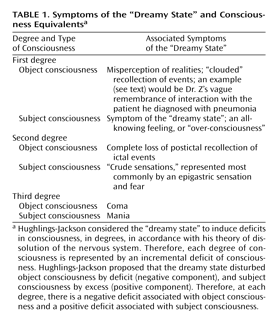
This takes me finally to the two types of consciousness that Hughlings-Jackson had proposed: subject consciousness and object consciousness.


Using his ideas of sensorimotor function, Hughlings-Jackson described two "halves" of consciousness, a subject half (representations of sensory function) and an object half (representations of motor function). To describe subject consciousness, he used the example of sensory representations when visualizing an object . The object is initially perceived at all sensory levels. This produced a sensory representation of the object at all sensory levels. The next day, one can think of the object and have a mental idea of it, without actually seeing the object. This mental representation is the sensory or subject consciousness for the object, based on the stored sensory information of the initial perception of it.

What enables one to think of the object? This is the other half of consciousness, the motor side of consciousness, which Hughlings-Jackson termed "object consciousness." Object consciousness is the faculty of "calling up" mental images into consciousness, the mental ability to direct attention to aspects of subject consciousness. Hughlings-Jackson related subject and object consciousness as follows:

The substrata of consciousness are double, as we might infer from the physical duality and separateness of the highest nervous centres. The more correct expression is that there are two extremes. At the one extreme the substrata serve in subject consciousness. But it is convenient to use the word "double."

Hughlings-Jackson saw the two halves of consciousness as constantly interacting with each other, the subjective half providing a store of mental representations of information that the objective half used to interact with the environment.

Further,


The term "subjective" answers to what is physically the effect of the environment on the organism; the term "objective" to what is physically the reacting of the organism on the environment.


Hughlings-Jackson's concept of subjective consciousness is akin to the if-then representation of mental rules.One needs to perceive the stimuli as clearly as possible and to represent them along with their associated actions so that an appropriate response set can be activated to respond to the environment. His object consciousness is the attentional mechanism that is needed to narrow down the options and focus on those mental representations and responses that are to be selected and used for interacting with the environment.

As per him, subject and object consciousness arise form a need to represent the sensations (stimuli) and movements (responses) respectively and this need is apparent if our stimulus-response and response-reinforcement mappings have to be taken into account for determining appropriate action.

All nervous centres represent or re-represent impressions and movements. The highest centres are those which form the anatomical substrata of consciousness, and they differ from the lower centres in compound degree only. They represent over again, but in more numerous combinations, in greater complexity, specialty, and multiplicity of associations, the very same impressions and movements which the lower, and through them the lowest, centres represent.


He had postulated that temporal lobe epilepsy involves a loss in objective consciousness (leading to automatic movements as opposed to voluntary movements that are as per a schedule and do not happen continuously) and a increase in subjective consciousness ( leading to feelings like deja-vu or over-consciousness in which every stimuli seems familiar and triggers the same response set and nothing seems novel - the dreamy state). These he described as the positive and negative symptoms or deficits associated with an epileptic episode.

It is interesting to note that one of the positive symptom he describes of epilepsy, that is associated with subjective consciousness of third degree, is 'Mania' : the same label that Minsky uses for a Critic in his sixth self-consciousness thinking level of thinking. The critic Minsky lists is :

Self-Conscious Critics. Some assessments may even affect one’s current image of oneself, and this can affect one’s overall state:

None of my goals seem valuable. (Depression.)
I’m losing track of what I am doing. (Confusion.)

I can achieve any goal I like! (Mania.)
I could lose my job if I fail at this. (Anxiety.)

Would my friends approve of this? (Insecurity.)


Interesting to note that this Critic or subjective appraisal of the problem in terms of Mania can lead to a subjective consciousness that is characterized as Mania.

If Hughlings-Jackson has been able to study epilepsy correctly and has been able to make some valid inferences, then this may tell us a lot about how we respond flexibly to novel/ familiar situations and how the internal complexity that is required to ensure flexible behavior, leads to representational needs in brain, that might lead to the necessity of consciousness.


Sphere: Related Content

Thursday, November 09, 2006

Kumbhakaran's discovered

A rare sleep disorder has come to light wherein people may sleep continuously for days. The longest reported spell is still about a month long and nowhere near the legendary six-month sleep that Khumkharna used to have.

Thankfully, sleeping for a day or two during the weekend is not counted as symptom of the disease, or I too might qualify (and I know of many others who would!).

Interestingly, there is also a familial fatal insomnia that has an underlying Prion mechanism and in which, once the illness is triggered you are unable to sleep, until you eventually die after about 15 months of sleep deprivation.

Hat-tip: The Frontal Cortex

Sphere: Related Content

Insanity in Films: A Rendezvous with Madness

Insanity has been typically depicted in a very stereotyped manner in both Bollywood as well as Hollywood. Moreover, the depiction is often insensitive and hackneyed, with the consequent stigmatization of all mental health issues.

While some recent Bollywood films like "Black" have drawn attention to some oft ignored neurological disorders like Alzheimer's; it is the depiction of schizophrenia and mental wards/asylums that has remained problematic.

While an occasional flick like "A beautiful mind" or"15 park Avenue" may end up portraying the schizophrenic condition sensitively and realistically, for each such film there are countless other films that associate the disorder with violence, bad intrusive thoughts and character defects of the protagonist. Thus, in my view, the need for films that provide a positive spin to the disease and counter the negative stereotype.

"Lago Raho Munnabhai" is one such film and it does so in a very subtle manner. While the film has been getting rave reviews for reviving Gandhian values and for making them trendy and cool for the Generation X by reincarnating those values as Gandhigiri, it has also been successful in making people sympathize with the Schizophrenic condition and do away with their prejudices that the auditory/visual hallucination accompanying Schizophrenia have to be negative/disturbing in nature. In this movie, Gandhi appears as a hallucination and guides Munna as per Gasndhian values , to resolve everyday problems.

The trigger of the illness in Munna, following some sleepless,no-nutrition, stressful days and nights, reading Gandhian Literature to the exclusion of everything else, is quite realistic and highlights some of the things that those vulnerable to schizophrenia need to avoid, to prevent relapse or triggering of the illness. The implied assertion that the 'split personality' may be due to a split between the Gandhian values that Munna has recently learned, and his old Bhai style violence-driven personality, though not technically correct as per current views, provides an antidote to the psychodynamic theories that posited that the disorder is a result of suppressing negative personality and thoughts: it is refreshing to consider the possibility that the negativity has so much shadowed our normal selves and become so common place, that if anything needs to be suppressed it would be positive and tender emotions and values.

The high point of the film is when Lucky Singh , the nemesis of Munna, launches an Ad Hominem attack on Munna and discredits all the good work he had done in spreading Gandhian values, by 'exposing' his insanity and by making him a laughing stock. Quite predictably, the general public in the movie leaves the side of Munna to let him fight his own devils (this time the devil is Gandhi:-), but surprisingly, the general public, that is the audience of the movie, stays with him and empathizes with him and laments not on his disease or his condition, but more so on the disease that is plaguing the Lucky Singhs of this world- that of corruption/ evil and on their own prejudices, insensitive and immature reaction to the 'insane'. If not for anything else, this alone should have ensured that this movie represented India in the Oscars rather than "Rang De Basanti".

Also heartening to note is, that though the film ends on a positive note, it doesn't offer any magical cure for Schizophrenia and makes it clear that Gandhi is there to stay with Munna. What it does manage to do is, that it rechristens the 'Furies' that tormented Orestes as 'Eumenides' or 'The Kindly ones' and by doing this 'cures' the real underlying disease- our prejudiced view of hallucinations as evil/tormenting/disturbing.

On a related note, the one conclusion that stands out in the Stephen Fry documentary "The Secret Life of the Manic-Depressive" is the strong reluctance of many suffering from the disease to pull the genetic switch (if there was one) that would have prevented them from their illness and all the resultant experiences. In the words of one of the people interviewed there, 'it is enough to have walked with angles, and everything else is a small price to play" (paraphrasing). While glamorization of mental illness is not exactly the right antidote to the pervasive stigmatization, yet an occasional association of positive affect, experiences and values with mental illness would go a long way in making us more sensitive and open about mental health issues.

There is a film festival being organized in Toronto, Rendezvous with Madness, showcasing some of the international films dealing with the mental health and stigmatization issues and hopefully its selection of movies is good. I find the section "Where there is Love there is Life" particularly interesting as the blurb contains reference to Gandhi.


Where There Is Love There Is Life: A Family Program
Mahatma Gandhi (1869-1948)


Where There Is Love There Is Life celebrates the resilience of children who struggle with loss and mental illness. This program of three Canadian shorts and a foreign feature presentation offers a hopeful portrait of such serious subjects as children caring for a mentally ill parent and also experiencing extreme anxiety. Themes like the power of forgiveness, the imagination, and of self-knowledge are introduced as tools for personal growth and survival in this mix of narrative drama and animation, which children and parents alike will find educational and entertaining. Rated PG.


It's sad that "Lage Raho Munnabhai" is not part of this festival, but I'm sure as an independent entry in the Oscars, it would be able to reach more audiences and destigmatize the issues surrounding mental health

Sphere: Related Content